
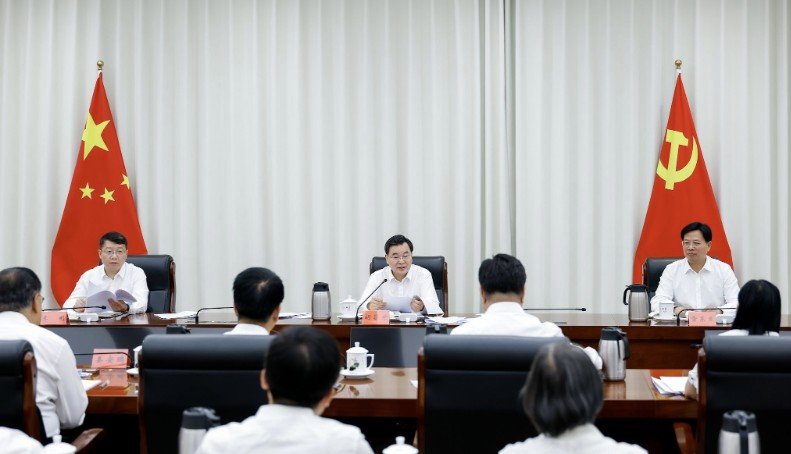
China Provincial Leadership
Historically, China’s provincial leaders have been known as 封疆大吏 (fengjiang dali), or “senior officials entrusted with governing a territory.” Provincial governance is often seen as a key test of an official’s abilities. Because each province operates with considerable autonomy, provincial governance experience is generally regarded as a prerequisite for promotion into the top echelon of Chinese leadership. The last three General Secretaries of the Chinese Communist Party, and five of the seven current members of the Politburo Standing Committee, have all governed a provincial-level region at some point in their careers.
Our database covers the members of the Party Standing Committees of China’s 31 provincial-level administrative regions. It is updated monthly, and the career records of leading cadres are revised on a rolling basis. The career records of leading cadres are captured to preserve publicly available data, as well as recognize patterns of potential factionalism in the appointment of provincial cadres.
Provincial leadership personnel changes
According to the Regulations on the Work of Local Party Committees of the Communist Party of China (中国共产党地方委员会工作条例), the composition of a standing committee is decided by the next-higher Party committee according to work requirements. All provincial standing committee members hold at least deputy provincial/ministerial rank (副省部级), so their appointments and transfers are decided by the Central Organization Department and approved by the Politburo or its Standing Committee. Chapter II, Article 8 provides that when a provincial Party committee holds its term-end election, its Party secretary, deputy Party secretaries, and other standing committee members are elected by the committee’s plenary session and submitted to the Central Committee for approval. Between Party congresses, the Central Committee may appoint, remove, or transfer standing committee members as work requires. However, Article 8 also states that the number of members changed this way within a single term should generally not exceed half of the standing committee.