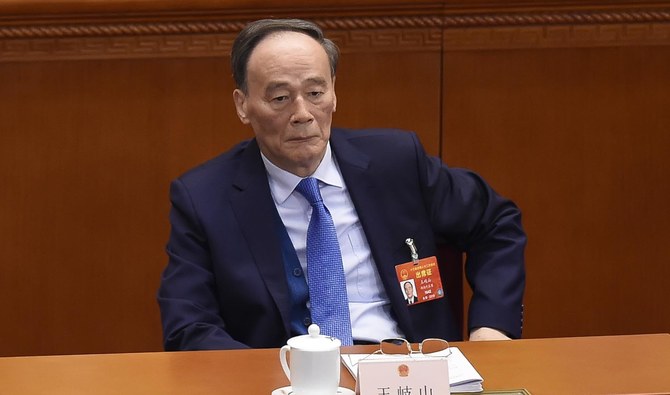
The Logic of Purges in the PRC

The Logic of Purges in the PRC

Purging close associates of retired high-ranking cadres signals the cadre’s waning influence, as well as potentially accumulating incriminating evidence against the cadre. By contrast, secretaries of current central leaders are not investigated prior to their patron to avoid invoking fear.

Key Takeaways
  • Purging close associates of retired high-ranking cadres signals the cadre’s waning influence and serves the purpose of accumulating incriminating evidence against the cadre
  • Investigations into high-ranking cadres carries risk eroding elite cohesion, as cadres’ confidence in their own political safety diminishes and they become more likely to draw up contingency plans once they realize nobody in the system is untouchable
  • Acting on incriminating evidence on centrally-managed officials requires the approval of China’s paramount leader, General Secretary Xi Jinping.
Background

One of the key patterns in political purges in the PRC are the order in which patron-clients are purged. Secretaries (mishu) of central leaders, both current and retired, are typically investigated after their leader. This occurs for two primary reasons. For current leaders, non-public investigations into their secretaries or other inner circle personnel will raise alarm and trigger contingency planning, in most cases involving an attempt to flee or commit suicide. For retired leaders, public investigations into their secretaries are often meant to signal the leaders’ waning influence within the Party.

Disciplinary investigations follow’s the “show me the man and I’ll show you the crime” phenomenon. Political progression in the CCP requires patronage networks with exchanges of favors. As a result, investigation into any network exposes a spiderweb of implicated officials. This is important because it gives the ultimate decisionmakers within the system leverage and freedom to decide who to investigate and who to preserve. Some crucial considerations are the extent to which one can investigate a political network without risking retribution from different cliques or endangering the legitimacy of the Party itself.

To illustrate these points, we will analyze the investigation into Wang Qishan’s patronage network and examine implications of recent military purges across the PLA.

Purges of Wang Qishan patronage network

Investigation into Wang Qishan’s network serve two purposes: to embarrass Wang and signal his waning influence, and to stockpile compromising material that could one day be used as leverage against Wang should he come under investigation himself.

Wang Qishan, long regarded as the Party’s financial troubleshooter, was famously a childhood friend of Xi Jinping and served as his most trusted political aide during Xi’s first term as General Secretary. As head of the powerful Central Commission for Discipline Inspection (CCDI) from 2012 to 2017, Wang spearheaded a sweeping anti-corruption campaign that brought down both “tigers” — high-ranking officials such as Zhou Yongkang, the former Secretary of the Central Political and Legal Affairs Commission (政法委) — and “flies,” an abundance of low-ranking officials throughout the country. In a political system plagued with corruption, many analysts have concluded that the campaign was at least as much a political maneuver as a genuine clean-up effort, serving to eliminate opposing factions and consolidate Xi’s grip on power.

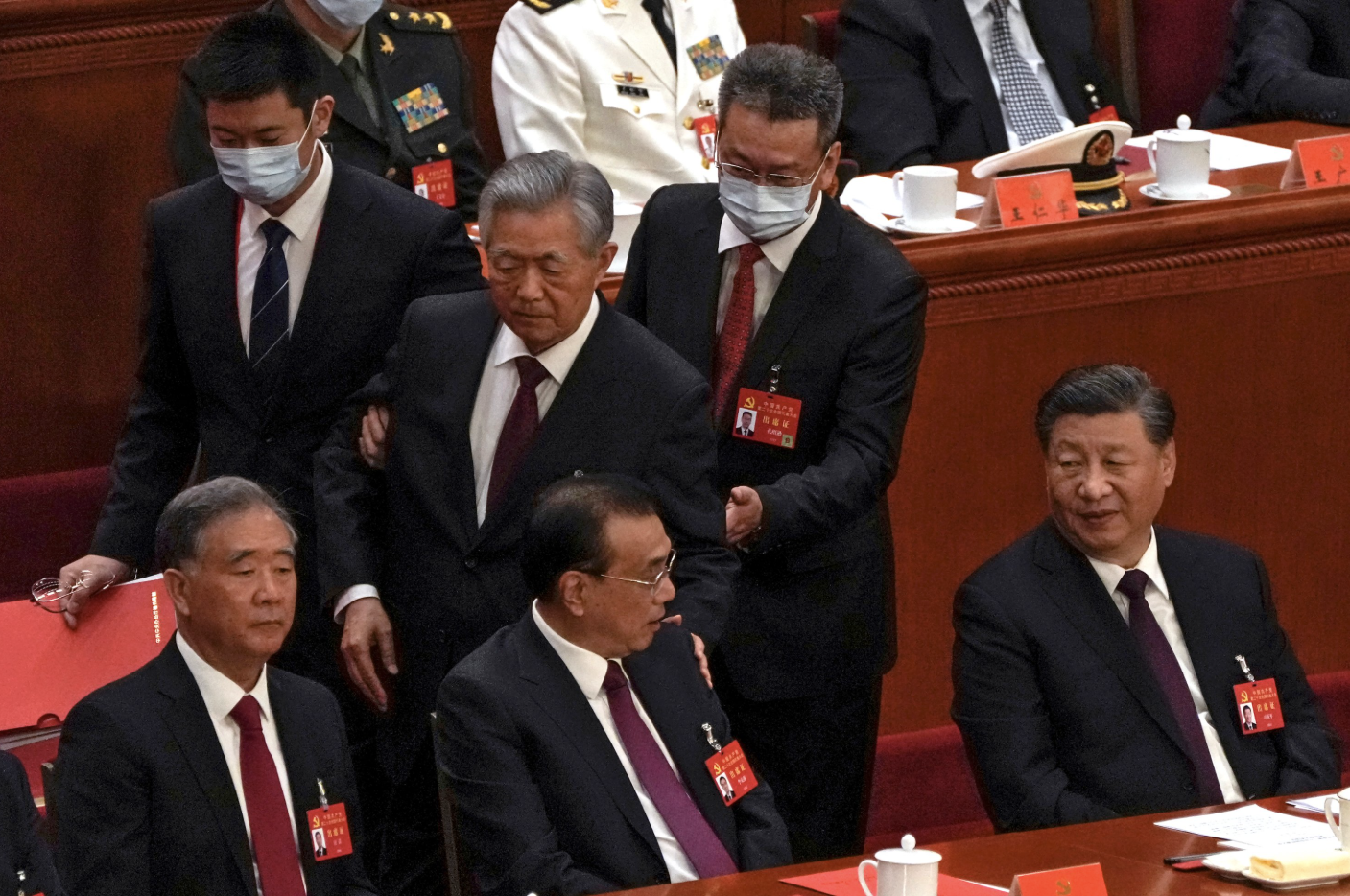
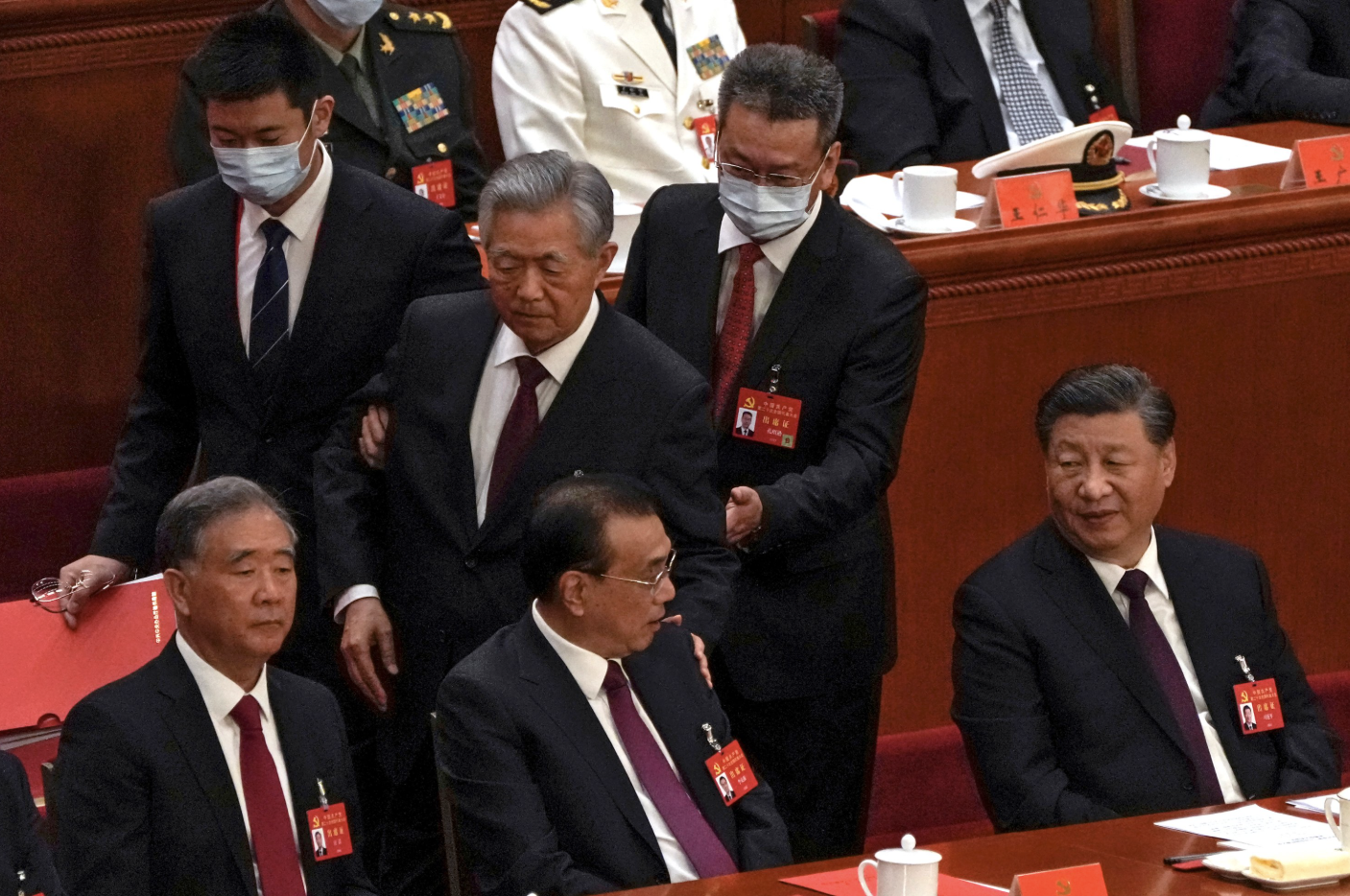
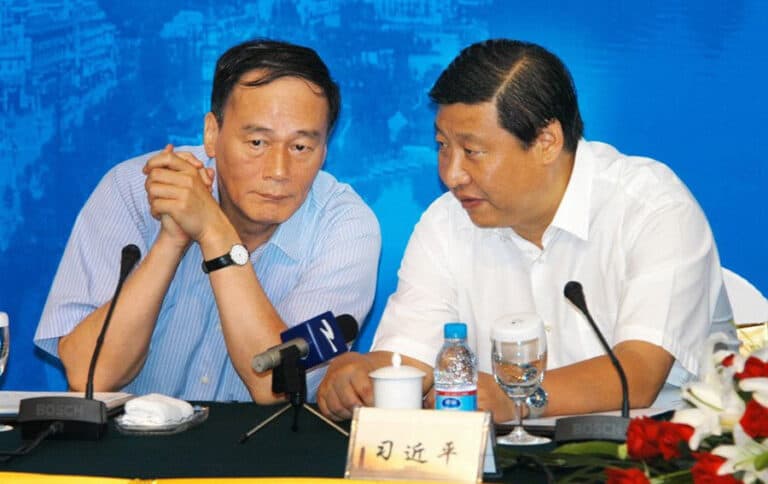
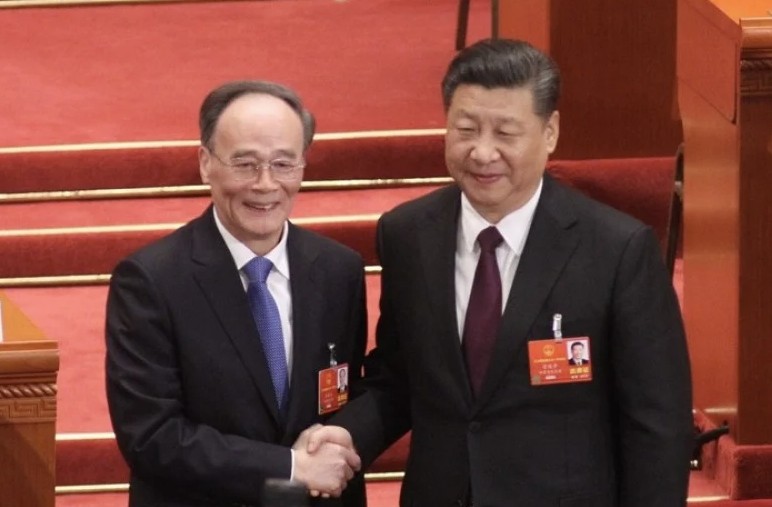
Left and right: Wang Qishan and Xi Jinping several decades apart

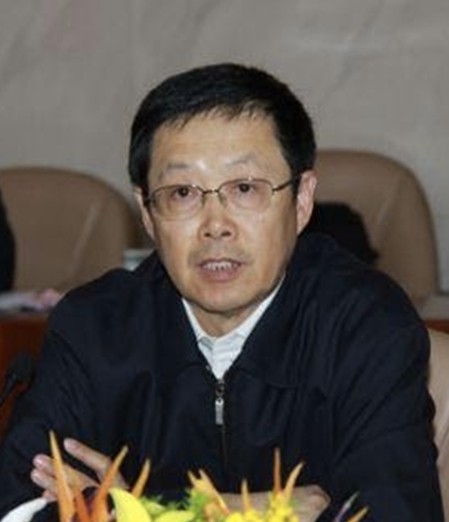
Since Wang Qishan’s retirement from the Politburo Standing Committee and CCDI in October 2017, a series of investigation into his patronage network unfolded over the following years. The first domino fell in October 2020 when Dong Hong, a close confidant and underling of Wang Qishan, was placed under investigation by the same organization of which he was once an inspection group leader. Dong’s relationship with Wang Qishan spanned more than two decades as he followed Wang across several postings across China.1

Interestingly, some analysis by China watchers suggest that Dong’s investigation was not an indication of a “Xi-Wang split.”2 One article traced Dong Hong’s career progression over the past 30 years and argued that Dong Hong and Wang Qishan did not share as close a relationship as the public believes. The article posits that Dong Hong’s career had plateaued prior to his joining the CCDI and, had his relationship with Wang Qishan been closer, would have seen Dong serve as a top aide or secretary general under Wang. However, this argument overlooks the stringent regulations governing appointments of leadership secretaries, which are tied to the civil service ranking of both the official and the secretary. The Central Organization Department issues detailed stipulations covering the promotion of civil servants, the permitted number of secretaries at each rank, and eligibility requirements such as age, length of service, and locality.

In the case of Dong Hong, his position as Group Leader of the 12th Central Inspection Group within the CCDI from March 2014 to July 2015 was at the deputy-ministerial/sub-provincial level (副省部级).3 Under Central Organization Department regulations, secretaries of provincial-ministerial level officials may not hold a civil service rank above deputy-department/sub-bureau level (副厅局级), while secretaries of deputy-ministerial/sub-provincial level officials may not exceed division level (正处级). Tracing Wang Qishan’s political career, his entry into the 17th Politburo as Executive Vice Premier in 2008 placed him at sub-national level (副国级) and his subsequent elevation to the 18th Politburo Standing Committee as CCDI Secretary brought him to national level (正国级). Meanwhile, Dong Hong had already reached deputy-ministerial/sub-provincial rank by 2006 through his appointment as deputy director of the Central Committee’s Literature Research Office, a ministerial-level organ. Given this parallel career trajectory, it is almost certainly the case that Dong was ineligible to serve as Wang’s formal secretary from the early 2000s onward. Nevertheless, his role within the CCDI suggests that he enjoyed Wang’s full trust and confidence, serving as a close aide without the official designation.

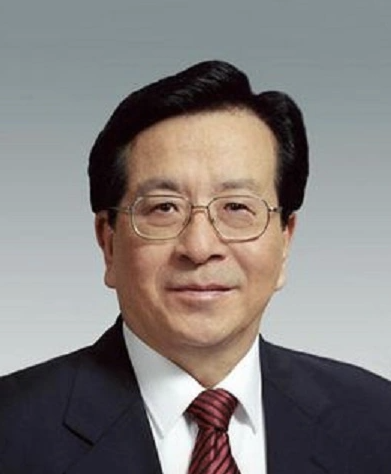
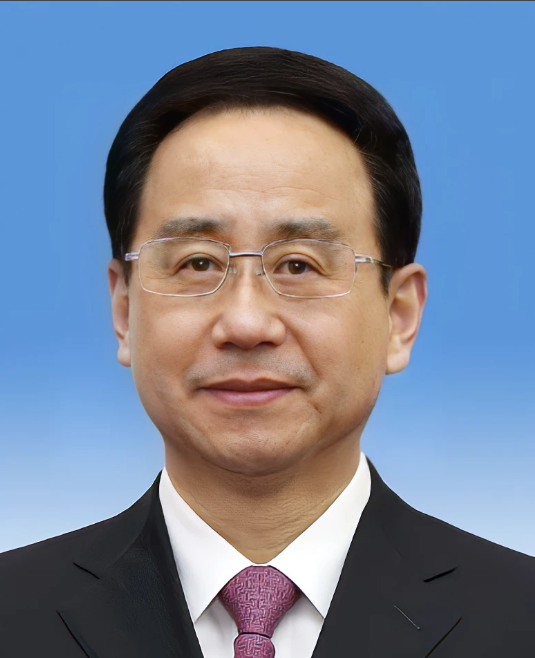
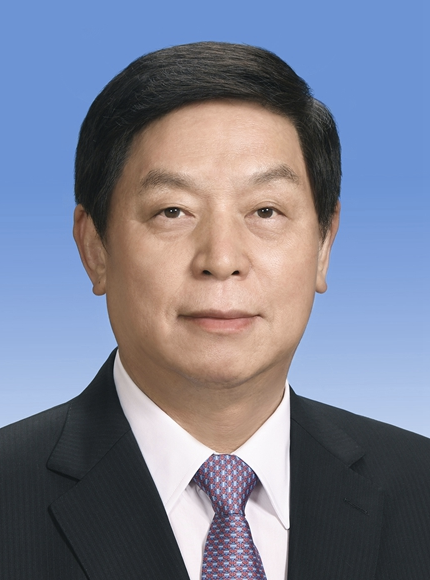
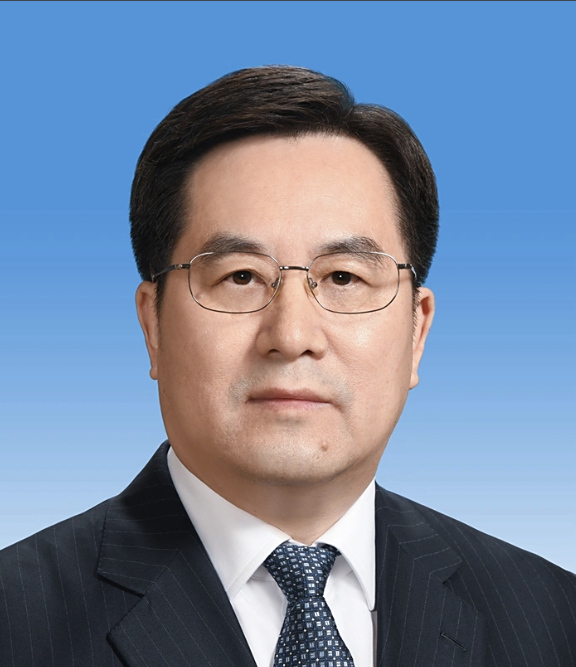
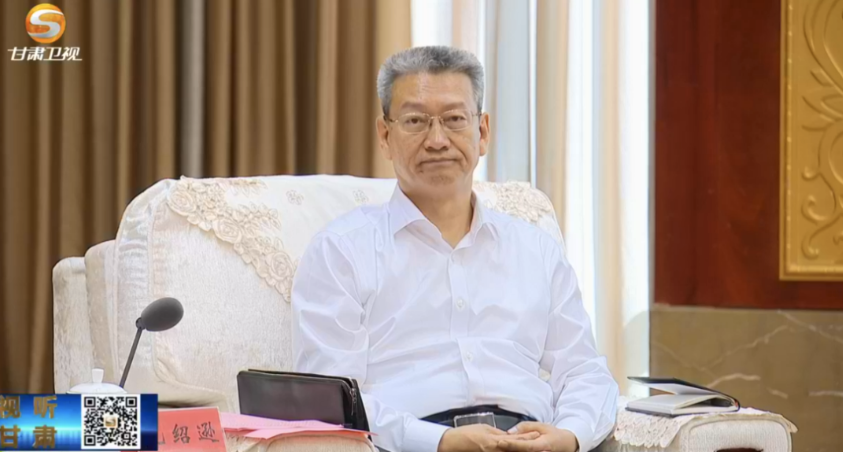
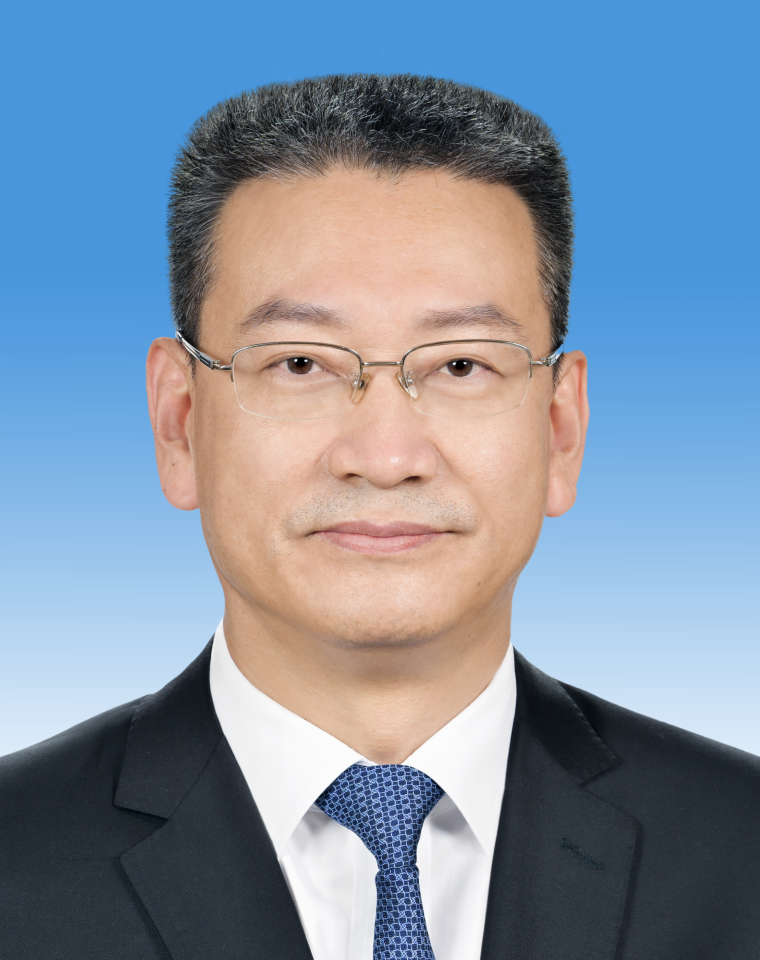
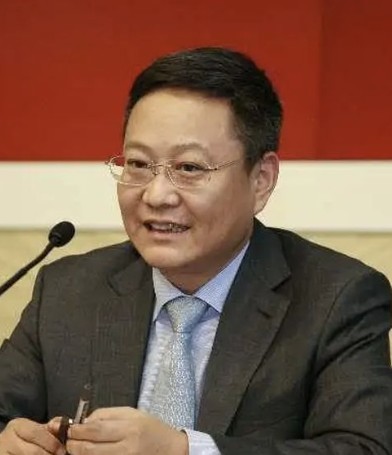
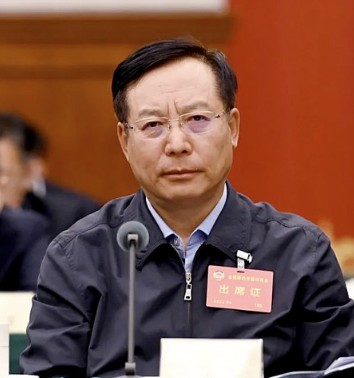
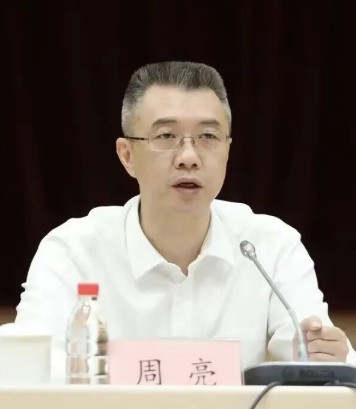
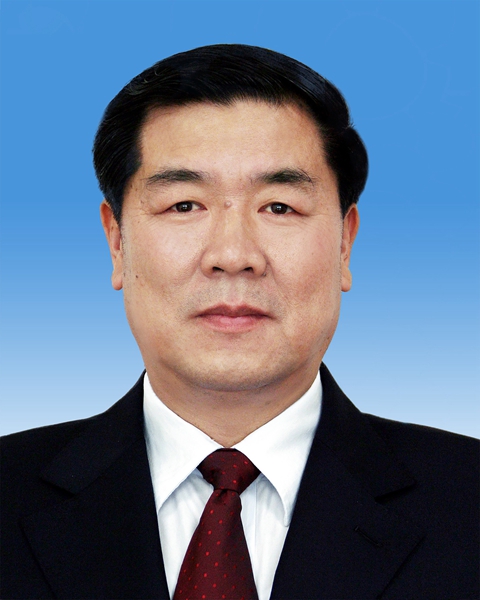
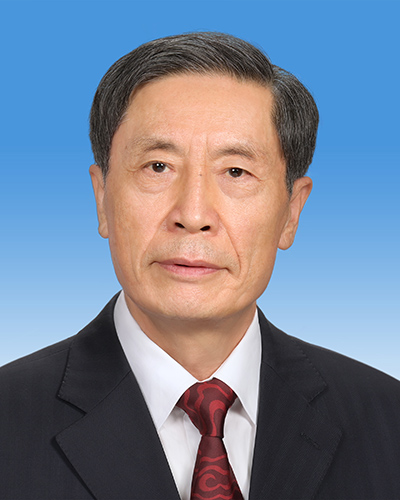
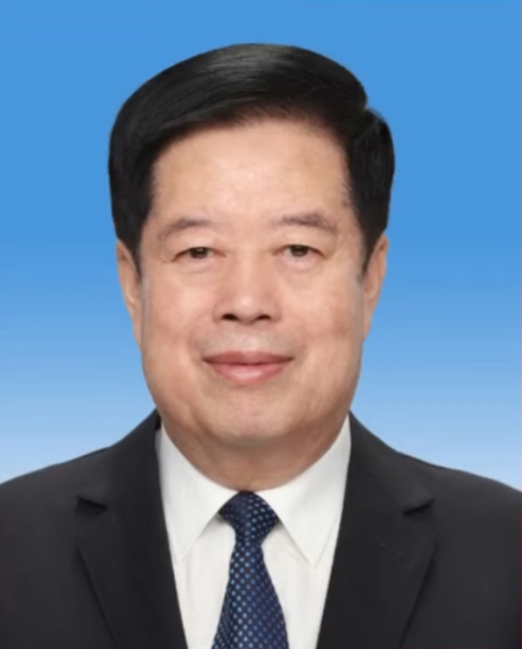
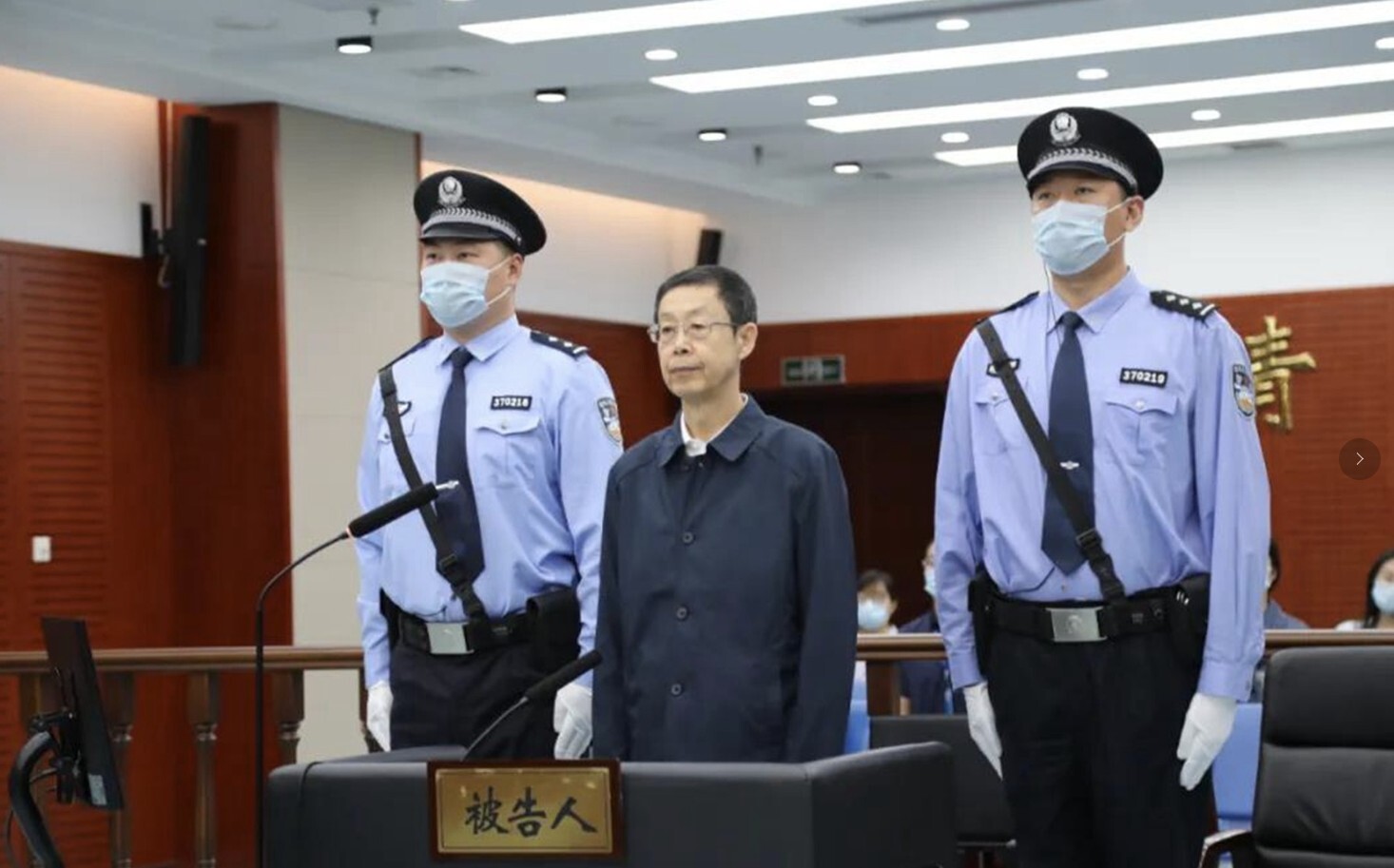
Left to right: Dong Hong, Tian Huiyu, Bi Jingquan, Zhou Liang

In addition to Dong Hong, several others with ties to Wang Qishan were investigated by the CCDI in ensuing years:

  • In April 2022, Tian Huiyu (田惠宇), former President of China Merchants Bank, was placed under investigation. Tian had served as a secretary for Wang Qishan more than two decades ago while Wang was president of China Construction Bank.
  • In May 2025, Bi Jingquan (毕井泉), former Deputy Secretary-General of the State Council, was placed under investigation by the CCDI and subsequently removed from the Party in December 2025.4 Bi had previously served as a secretary for Wang Qishan while Wang was Vice Premier.5
  • In March 2026, Zhou Liang (周亮), Vice Minister of the National Financial Regulatory Administration and long-term secretary of Wang Qishan, was placed under investigation by the CCDI. Zhou is a well-known associate of Wang’s, having served under Wang in various postings across Guangdong, Hainan, Beijing, and finally as the CCDI’s Organization Department head in 2015.

Perhaps the more pertinent question is not how closely these individuals were connected to Wang Qishan, but rather what the purging of his associates is meant to accomplish — especially provided that Wang is now a 77-year old retired politician with no obvious political faction or lingering influence. Two assumptions seem reasonable: first, that these associates are targeted because of their ties to Wang Qishan, and second, any investigations into a former Politburo Standing Committee member’s patronage network must carry Xi Jinping’s approval — whether tacit or explicit. Given that four aforementioned individuals served under Wang Qishan at one point or another, they are almost certainly privy to sensitive information about Wang. Ultimately, these investigations appear to serve two purposes: to embarrass Wang and signal his waning influence, and stockpile compromising material that could one day be used as leverage (把柄) against him should he come under investigation himself.

A question raised by China watchers is whether Wang Qishan will one day come under investigation himself. This is unlikely for the aforementioned reason that purges into his patronage network have achieved the desired effects of embarrassing Wang and signaling his political decline. Additionally, high-ranking purges carry a significant tradeoff of eroding other cadres’ confidence in their own political safety, incentivizing them to make contingency plans once they realize that no one in the system is untouchable. Perhaps the clearest example is the investigation of former Central Political and Legal Affairs Commission Secretary Zhou Yongkang, who was a member of the Politburo Standing Committee from 2007 to 2012. Zhou Yongkang became the first (former) Politburo Standing Committee member to face formal investigation and prosecution since the reform era, breaking an unspoken rule in Chinese politics known as “刑不上常委” or “punishment does not extend to [members of] the [Politburo] Standing Committee.” While no other Politburo Standing Committee has been investigated since Zhou, breaking this precedent has likely shaken the confidence of other high-ranking cadres.

Purges within the military

The past few years have witnessed the most significant purge of senior military officials since the investigation of retired Central Military Commission (CMC) vice chairmen Guo Boxiong and Xu Caihou more than a decade ago. Most China watchers attribute Guo and Xu’s downfall primarily to their ties with the Shanghai clique and former Chongqing Party Secretary Bo Xilai, compounded by Xi’s broader effort to consolidate power during his first term. The current round of purges is strikingly different — the investigations into sitting CMC vice chairmen He Weidong and Zhang Youxia are particularly notable given that both men appeared to be staunch Xi loyalists who were ousted mid-term. While theories and speculation on the causes of recent purges are plenty,6 the following section examines implications of these high-level military purges from Xi’s perspective and offers some theories moving forward.

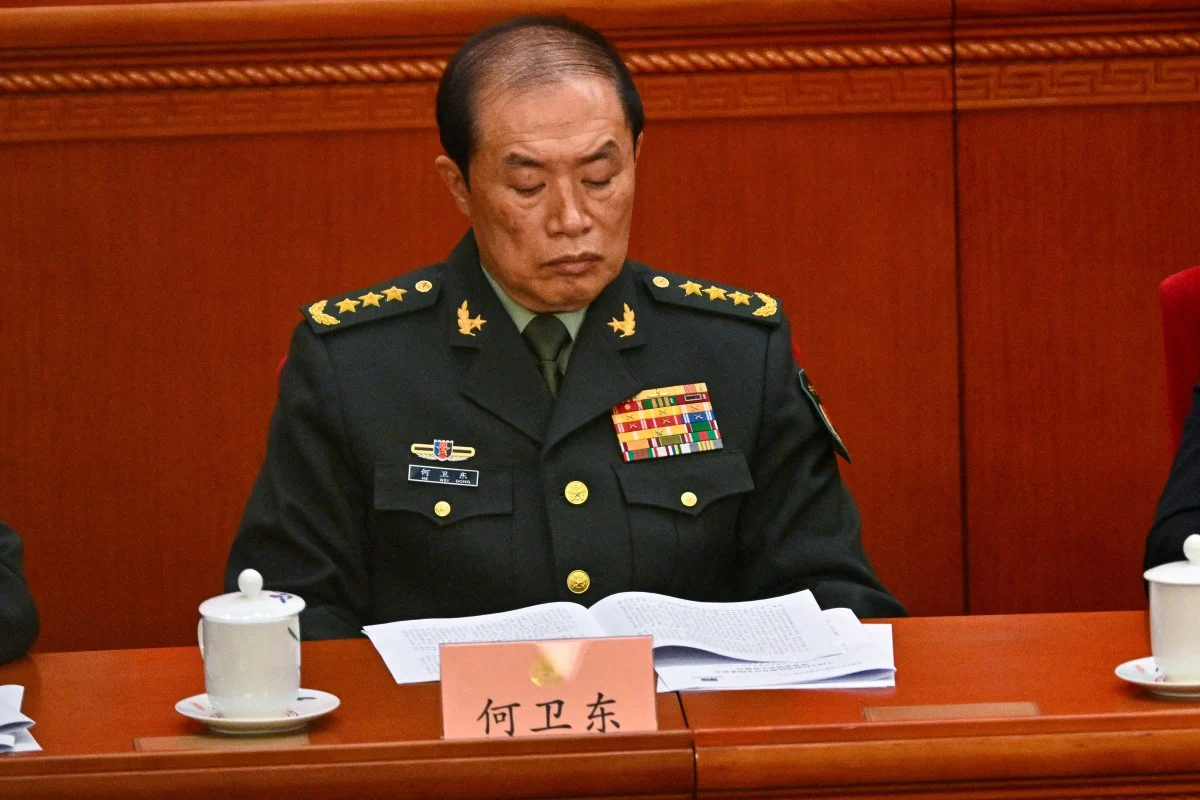
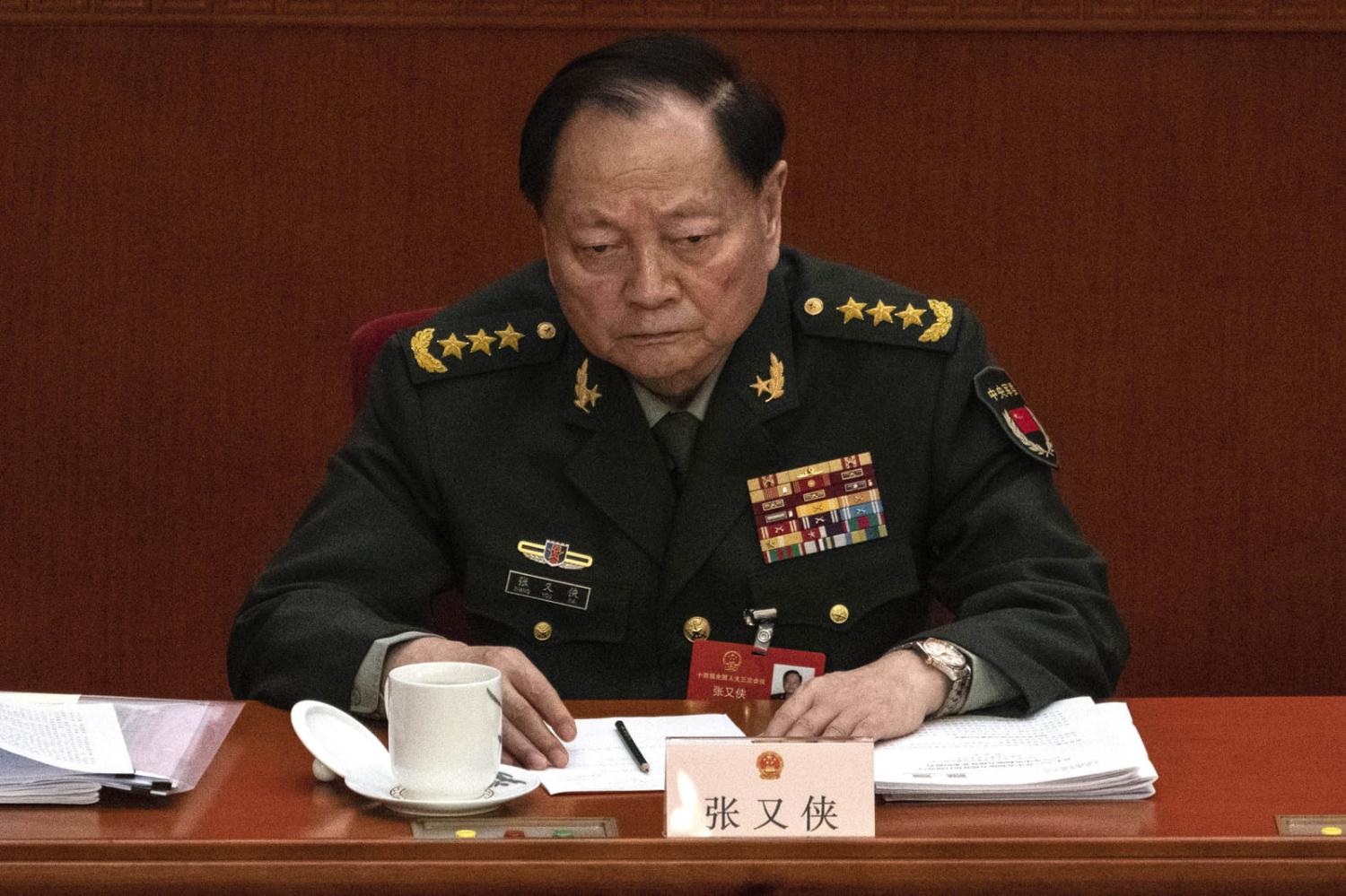
Left: CMC Vice Chairman He Weidong. Right: CMC Vice Chairman Zhang Youxia

There is plenty of existing analysis on factionalism within the PLA, including speculation on which camps of personnel belonged to Zhang Youxia or He Weidong. While it is difficult for an outsider to confirm the validity and extent to which these factions exist, it is reasonable to assume that investigations into lower-ranked officials surfaces incriminating evidence on higher-ranking patrons. However, whether or not decisionmakers act on these evidences is a carefully considered political maneuver, a point we will examine in more detail in the following section. In the case of investigations into particularly high-ranking military officials such as Zhang Youxia or He Weidong, the decisionmaker with the final say (拍板权) is undoubtedly Xi. While the true reason for He Weidong’s removal is unclear, a possible explanation for Zhang Youxia’s demise is the concept of political counterweights.

The practice of using political counterweights is deeply ingrained in Chinese politics. Historically, Mao was known to be masterful at inciting and orchestrating political infighting to solidify his own grasp on power; the two most notable cases in the Mao era were the political counterweights of Lin Biao to Liu Shaoqi and Deng Xiaoping to Zhou Enlai. In Xi’s China, some have speculated that Politburo Standing Committee members Li Qiang and Cai Qi serve a similar purpose in their positions as Premier and Director of the CCP General Office, respectively.7 When the same logic is applied to the military, the CMC has seen at least two concurrent generals serve as vice chairmen at any given time since its establishment in 1982. He Weidong’s removal several months prior had left Zhang Youxia without a political counterweight in the CMC, fueling widespread speculation that Zhang was accumulating enough power to cause problems for Xi. Whether Xi genuinely believes the threats posed by Zhang is difficult to verify — in the end, the optics alone may have been sufficient cause for action.

An interesting point to consider is how these widespread purges will affect incoming cohorts of military leaders. Just weeks after the announced investigation into Zhang Youxia, the Central Intelligence Agency published a video targeting Chinese military personnel.8 The CIA is undoubtedly aware that widespread purges increases the likelihood of informants hedging their individual safety with backup plans; it is reasonable to assume that those promoted to fill vacant military leadership positions would account for the possibility that they themselves may one day be targets of investigation. As a result, any ensuing high-level purges of military personnel may well correspond with an increase in leaked military intelligence, whether through public or private channels.

A point seldom mentioned is the possibility that the remaining CMC vice chairman position be replaced by a civilian to signal potential succession planning by Xi. This pattern follows the previous two CCP General Secretaries, Xi Jinping and Hu Jintao, both of whom served as CMC vice chairmen for several years as heir apparent. While Xi has by no means signaled any potential candidates, the incoming counterpart(s) to Zhang Shengmin as CMC vice chairman would be an interesting tell on Xi’s succession plans, insofar as any such plans exist.

When weighing corruption investigations within the military, Xi faces several key considerations:

  • Does Xi possess the military backing necessary to take down generals within the army?
  • How deep does Xi go when it comes to investigating the networks of military officials?
  • To what extent do purges within the military shake up the troops’ morale?

If one makes the reasonable assumption that Xi is a calculated and rational decision-maker, it must be the case that Xi believes the benefits of the PLA purges outweigh the risks. Whether these benefits correspond to military readiness, political safety, or succession planning remains to be seen.

The Logic of Purges

A crucial assumption we make in our assessment of China’s discipline inspection process is that acting on incriminating evidence on centrally-managed officials requires the approval of China’s paramount leader, General Secretary Xi Jinping.

An important, often undiscussed question, is whether an investigation into high-ranking officials is a top-down or bottom-up process. By top-down we mean orders given by Xi Jinping to find dirt and get rid of an official for political reasons; by bottom-up we refer to incriminating evidence against a high-ranking official that surfaces from investigations into lower-ranking officials. If the former is true, what are the underlying motives for Xi to personally oversee and initiate the investigation of certain cadres? If the latter is true, who decides whether to present the evidence to Xi Jinping? How does someone within the discipline inspection commission leadership gauge whether Xi would be receptive to incriminating evidence?

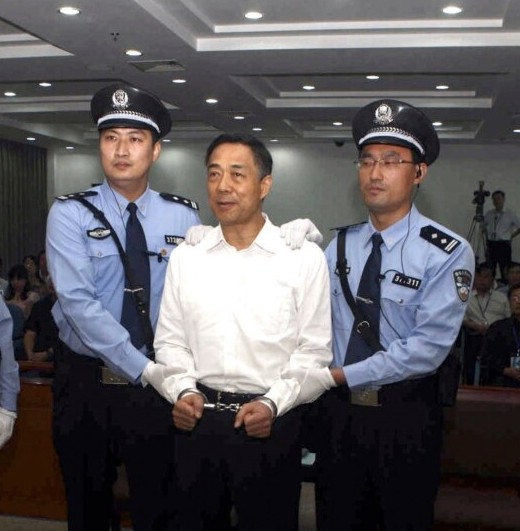
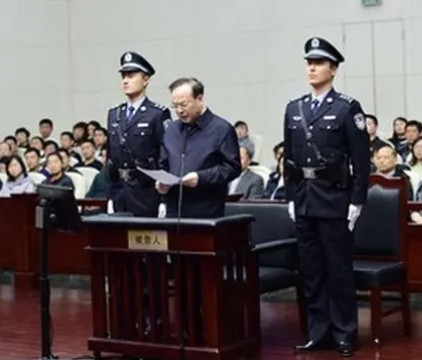
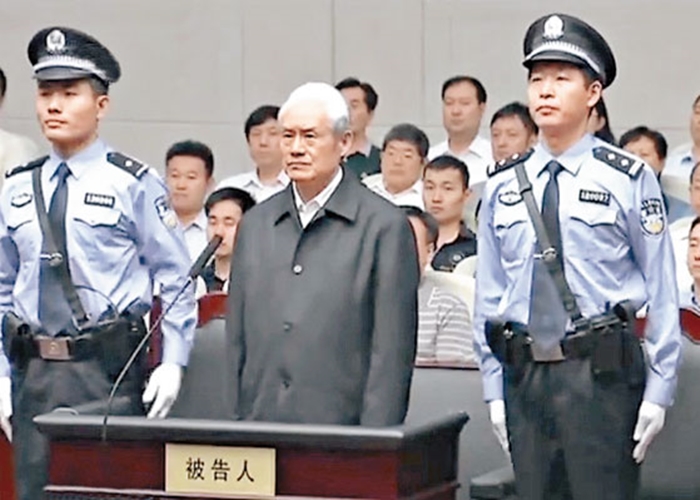
Three of the highest-level purges in the past two decades.
Left: Former Chongqing Party Secretary Bo Xilai. Center: Former Chongqing Party Secretary Sun Zhengcai. Right: Former CPLC Party Secretary Zhou Yongkang

To clarify, “high-ranking” officials in this context refers to centrally-managed cadres (中管干部), whose appointments are reviewed and approved by the Central Organization Department. Centrally-managed cadres are predominantly above the sub-provincial/deputy-ministerial level (副省部级), with the exception of a select few important centrally-managed bureau-level (中管正局级) positions. The distinction between initiating an investigation and acting on evidence is important. Cases against high-ranking officials may be created due to factionalism and patron-client relationships, but the decision to launch an investigation must necessarily carry the tacit or explicit approval from Xi. From the case studies above, a crucial assumption we make in our assessment of China’s discipline inspection process is that acting on incriminating evidence on centrally-managed officials requires the approval of China’s paramount leader, General Secretary Xi Jinping.

We make this assumption primarily based on scale. Based on statistics released by the CCDI and National Supervisory Commission in January 2026, there were a total of over 1.012 million cases initiated during 2025. Of the 1.012 million cases, 115 were officials above sub-provincial/deputy-ministerial level, 5,016 were at the bureau/department level (厅局级), and an increasing amount at the county/division level and below.9 A further subset of 69 officials above sub-provincial/deputy-ministerial level and 4,155 officials at the bureau/department level were disciplined. It would seem implausible for Xi to personally approve disciplinary actions against thousands of lower ranking officials, whereas oversight into a hundred or so high-ranking cases is far more manageable.

Delegating authority for CCDI officials to investigate lower-ranking secretaries or patron-client relationships require careful consideration and a deep understanding of internal factionalism within the system. Due to the opaqueness of the CCDI and its processes, it is near impossible for an outsider to have a strong understanding of its system. However, a reasonable assumption is that officials assigned to work on high-level cases must possess a strong understanding of the political background, patronage networks, and many other details of investigated cadres.

For an important and opaque organization like the CCDI, a few important questions remain:

  • How do signoffs within CCDI leadership, the Politburo, and the Politburo Standing Committee work when it comes to investigations? To what extent does collective decision-making exist, if any?
  • Are investigations initiated through a top-down or bottom-up process? Specifically, to what extent are investigations initiated through bottom-up, lower-level complaints as compared to top-down, politically motivated directives?
Key terms
  • Fighting “tigers” and “flies” (打虎拍蝇) — anti-corruption crackdown on high-ranking cadres (tigers) and low-ranking officials (flies)
  • “Punishment does not extend to [members of] the [Politburo] Standing Committee” (刑不上常委) — an unspoken rule in Chinese politics whereby disciplinary measures do not apply to members of the Politburo Standing Committee. This unspoken rule was broken only once in the past four decades, where the investigation into former Secretary of the CPLC, Zhou Yongkang, brought down a retired PBSC member and demoted the position of CPLC Secretary from the Politburo Standing Committee to the Politburo.
  • Centrally-managed cadres (中管干部) — officials whose appointments are reviewed and approved by the Central Organization Department. Centrally-managed cadres are predominantly above the sub-provincial/deputy-ministerial level.
Notes:
  1. Cate Cadell, “Former aide to Chinese vice president named in anti-graft probe,” Reuters, October 3, 2020, https://www.reuters.com/world/china/former-aide-chinese-vice-president-named-anti-graft-probe-2020-10-03/ ↩︎
  2. “Analyzing the Purge of Wang Qishan Aide Dong Hong,” SinoInsider, October 11, 2020, https://sinoinsider.com/2020/10/analyzing-the-purge-of-wang-qishan-aide-dong-hong/ ↩︎
  3. For more information on civil service rankings, see https://thinkprc.com/civil-service-ranking/. ↩︎
  4. Phoebe Zhang, “Former chief of China’s food and drug watchdog ousted from Communist Party,” SCMP, December 9 2025, https://www.scmp.com/news/china/politics/article/3335712/former-chief-chinas-food-and-drug-watchdog-ousted-communist-party ↩︎
  5. Lobsang Tsering, “Another Minister-Level Leader Purged”, Asia Society, June 6, 2025, https://asiasociety.org/policy-institute/china-5-june-6-2025 ↩︎
  6. “The purges within China’s military are even deeper than you think,” ChinaPower, February 24, 2026, https://chinapower.csis.org/china-pla-military-purges/  ↩︎
  7. Guoguang Wu, “Li Qiang Versus Cai Qi in the Xi Jinping Leadership: Checks and Balances with CCP Characteristics?” China Leadership Monitor, August 29 2023, https://www.prcleader.org/post/li-qiang-versus-cai-qi-in-the-xi-jinping-leadership-checks-and-balances-with-ccp-characteristics ↩︎
  8. Martina, Michael, “CIA makes new push to recruit Chinese military officers as informants,” Reuters, February 12, 2026, https://www.reuters.com/business/media-telecom/cia-makes-new-push-recruit-chinese-military-officers-informants-2026-02-12/ ↩︎
  9. “2025年全国纪检监察机关处分98.3万人 包括69名省部级及以上干部” Xinhua News, For more information see https://www.news.cn/politics/20260117/fe47e8980e1d4e71b0afe47f1b4872fc/c.html ↩︎

If you would like to support us, please consider buying us a coffee.


China’s Civil Service Ranking

China’s Civil Service Ranking

Understanding China’s civil service ranking is critical in deciphering power dynamics in Chinese politics. Due to strict requirements for political advancement, any exceptions to the rule indicate a promising or stagnant political career.

Key takeaways
  • National and sub-national level rankings can indicate national priority preferences, such as whether top leadership is focused on economic growth or anti-corruption.
  • Promotions for officials that deviate from conventional or unspoken rules indicates political patronage and positive career trajectory.
  • Leadership cadres and their secretaries are both subject to civil service ranking requirements. As a result, previous secretaries may continue to serve as trusted confidants in an unofficial capacity when either the patron or client is promoted.
  • Seating arrangements in media appearances or conferences can indicate promotions or demotions prior to official announcements.
Overview

Civil service ranking in China is often an underexamined topic when analyzing Chinese politics. The current bureaucracy reflects an evolution of Chinese governance that dates back to the imperial dynasties and administrative ranks developed in the Han and subsequent dynasties. After the establishment of the PRC, the Chinese civil service system was built on the Soviet nomenklatura model with a few adaptations. To understand governance in modern China, one must have a solid grasp of the administrative structure and relative power of different positions within the Chinese bureaucracy.

Why is familiarity with civil service ranking important? Due to strict requirements for political advancements, any exceptions to the rule indicate a promising political trajectory, and vice versa. Additionally, civil service rankings can explain the movements of leadership secretaries, whereby secretaries faced with term limits are promoted into a higher rank and may still serve as a close confidant without the official designation.1

The table below outlines the five highest leadership ranks in the PRC.

Leadership LevelExamples
National level (国家级正职)Politburo Standing Committee members, President, Premier, NPC Chairman, NPC Chairman, CPPCC Chairman, CMC Chairman
Sub-National level (国家级副职)Politburo members, Vice Premiers, State Councilors, NPC Vice Chairmen, CPPCC Vice Chairmen, Vice President, CMC Vice Chairmen
Provincial/Ministerial-level (省部级正职)Provincial Party Secretaries, Governors, State Council Ministers, head of key bureau-level departments
Sub-Provincial/Deputy-Ministerial level (省部级副职)Provincial Standing Committee members, State Council Deputy-Ministers, deputy-heads of key bureau-level departments
Department/Bureau level (厅局级正职)Department heads

National level (国家级正职)

The Politburo Standing Committee, a seven-member subset of the Politburo, represents the pinnacle of Chinese leadership. As such, all seven members are at the highest civil service ranking of national level.

Staple positions at the national level include the top leader (一把手) within the “Five Leading Organs” (五大班子). These are the General Secretary of the CCP, the Premier of the State Council, the Chairman of the National People’s Congress (NPC), the Chairman of the Chinese People’s Political Consultative Conference (CPPCC), and the Chairman of the Central Military Commission (CMC). Since Jiang Zemin, the General Secretary of the CCP has concurrently served as the Chairman of the CMC with the exception of a two-year gap during the Jiang-Hu handover in 2002.

Within both the 19th and 20th Politburo Standing Committees, the remaining positions within the Standing Committee are the First-ranked Secretary of the Secretariat, the First-ranked Vice Premier of the State Council, and the Secretary of the Central Commission for Discipline Inspection (CCDI). Notably, the rankings of the First-ranked Vice Premier and Secretary of the CCDI fluctuated over the past two decades. In both the 18th and 19th Politburo Standing Committee, the CCDI Secretary was the 6th-ranked member and the First-ranked Vice Premier was the 7th-ranked member. This order is reversed in the 16th, 17th, and 20th Politburo Standing Committees, signaling priority shifts between economic growth and corruption crackdown. Crucially, this indicates that political rankings at the highest level can indicate national priority preferences, such as whether top leadership is focused on economic growth or anti-corruption crackdowns.

Since Xi Jinping’s first term (2012-2017), a key position that was demoted from the Politburo Standing Committee to the Politburo was the Secretary of the Central Political and Legal Affairs Commission (CPLC), a powerful organization that oversees the country’s security apparatus, including the Ministry of Public Security, Ministry of State Security, and the People’s Armed Police. This demotion was due in large part to the purge of former CPLC Secretary Zhou Yongkang, who’s control over the the internal security apparatus raised concerns within the Chinese leadership.

Sub-National level (国家级副职)

The sub-national level consists of all non-Standing Committee Politburo members, Central Secretariat members, State Council Vice Premiers and State Councilors, CMC Vice Chairmen, NPC Vice Chairmen, CPPCC Vice Chairmen, the Director of the National Supervisory Commission, the President of the Supreme People’s Court, and the Procurator-General of the Supreme People’s Procuratorate.

An interesting case is the 8th-ranked official, Han Zheng who, despite occupying a sub-national level post as Vice President, continues to enjoy national-level privileges as a former member of the 19th Politburo Standing Committee.

Provincial/Ministerial level (省部级正职)

Although there are no written requirements, all civilians within the roughly two hundred full members of the CCP Central Committee are at the provincial/ministerial level or higher based on the positions they hold within the Party and the government. Notably, there are numerous officials at the provincial/ministerial-level who are not full or alternate members of the Central Committee. One such example is sub-national level official Jiang Xinzhi, who served as the Deputy-Head of the Central Organization Department (provincial/ministerial level) and is a current Vice Chairmen of the CPPCC. Other important positions, such as the Group Leaders for Inspection Work (巡视组组长) under the Central Leading Group for Inspection Work and the Director of the Central Policy Research Office (CPRO), are also at the provincial/ministerial level due to the positions’ significance.

There are essentially three cohorts of provincial-ministerial level officials:

  • At the provincial level, the top-ranked leader of the “Four Leading Organs” (四套班子), the Provincial Party Secretary, Governor, Provincial People’s Congress Chair, and the Provincial CPPCC Chair, in each of China’s 31 provinces are at the provincial-ministerial level.
  • Within the State Council, the top-ranked leader of State Council ministries and commissions, heads of major state institutions such as the People’s Bank of China and the National Audit Office, as well as top-ranked official in centrally-managed state-owned enterprises
  • Within the Central Party apparatus, for departments where the top leader is at national or sub-national level, the deputy position is at provincial-ministerial level. Examples include the deputy-heads of the Central Organization Department, Central Publicity Department, United Front Work Department. In special cases where a lower-ranked department is of exceptional importance, such as the CCP Central Committee General Office, the Deputy Director is also at the provincial-ministerial level.

Sub-Provincial/Deputy-Ministerial level (省部级副职)

The sub-provincial/deputy-ministerial level is a critical milestone in the careers of Chinese bureaucrats. Officials above this rank are referred to as “high-ranking cadres” (高级干部). Apart from a select few highly important department/bureau level positions, the Central Organization Department manages appointments, dismissals, and dossiers of all cadres above the sub-provincial/deputy-ministerial level. As such, all Chinese officials above the sub-provincial/deputy-ministerial level are referred to as centrally-managed cadres (中管干部).

The vast majority of civilian alternate members of the Central Committee are at the sub-provincial/deputy-ministerial level. Following the logic of the three cohorts outlined above, the deputy positions of these provinces, ministries, and offices are necessarily at the sub-provincial/deputy-ministerial level.

Department/bureau level and below

Below the sub-provincial and deputy-ministerial level, civil service rankings are organized in a dual-track system that consists of the following: leadership civil servants (公务员领导职务) and generalist civil servants (综合管理类公务员).2

Department/Bureau level (厅局级正职)

The department/bureau level encompasses a broad spectrum of officials. Examples of department/bureau level posts include division chiefs within central ministries and departments of the CCPCC and State Council, sub-provincial level city deputy leaders, prefecture-level city party and government heads, as well deputy positions within deputy-ministerial level state-owned enterprises.

Leadership civil servants and generalist civil servants can occupy the same civil service rank. To better understanding this concept of rank equivalence, we can look at the example of a Discipline Inspection and Supervision Group (中央巡视组), subordinate to the CCDI, stationed in the Ministry of Emergency Management. From open source information, as of August 2025 the Discipline Inspection and Supervision Group consisted of the following members:3

  • Pu Yufei, Head of the Discipline Inspection and Supervision Group stationed at the Ministry (department/bureau-level)
  • Qiao Yinghong, Deputy Head of Discipline Inspection and Supervision Group stationed at the Ministry (department/bureau-level)
  • Ding Yi, Deputy Head of Discipline Inspection and Supervision Group stationed at the Ministry (level 1 bureau rank official)
  • Liu Xiaoxiao, Deputy Head of Discipline Inspection and Supervision Group stationed at the Ministry (level 1 bureau rank official)

Note that all four of the above officials occupy the same civil service rank. The difference is that Pu Yufei and Qiao Yinghong are considered leadership civil servants whereas Ding Yi and Liu Xiaoxiao are generalist civil servants. To highlight the importance and power of Discipline Inspection and Supervision Groups, all four officials occupy the same rank as a municipal Party Secretary in a non-Provincial-level city. Whereas Inspection Group leaders may not manage any personnel at all, they ostensibly hold more power than a municipal Party Secretary who governs millions of civilians.

The following table compares the leadership positions at the department/bureau level and below with the minimum equivalent ranks for generalist civil servants.

Leadership Positions (Sub-Department level and below)Minimum Equivalent Generalist Civil Service Rank
Department/Bureau level (厅局级正职)Level 1 Bureau Rank Official (一级巡视员)
Deputy Department/Bureau level (厅局级副职)Level 2 Bureau Rank Official (二级巡视员)
County/Division level (县处级正职)Level 2 Division Rank Official (二级调研员)
Deputy County/Division level (县处级副职)Level 4 Division Rank Official (四级调研员)
Township/Section level (乡科级正职)Level 2 Principal Staff Member (二级主任科员)
Deputy Township/Section level (乡科级副职)Level 4 Principal Staff Member (四级主任科员)

Promotions of Generalist Civil Servants

According to Baidu Baike, the average time required for a staff member to reach the department/bureau level is 25 years and the average age of a department/bureau level cadre is 55.4 This benchmark is a useful guideline to measure the speed at which cadres are promoted. China watchers pay particular attention to cadres who are promoted faster than average, often indicating strong political patronage and/or achievements.

There are a total of twelve levels for generalist civil servants. Notably, civil service rankings below deputy department/bureau-level are often mistranslated as “inspectors” or “investigators” in the cases of “巡视员” and “调研员,” respectively.5 The table below outlines each rank and requirements for advancement.

Generalist Civil Service RankBasic Requirements
Level 1 Bureau Rank Official (一级巡视员)At least four years at Deputy Department/Bureau-level or as Level 2 Bureau Rank Official
Level 2 Bureau Rank Official (二级巡视员)At least four years as Level 1 Division Rank Official
Level 1 Division Rank Official (一级调研员)At least three years at County/Division-level or as Level 2 Division Rank Official
Level 2 Division Rank Official (二级调研员)At least two years as Level 3 Division Rank Official
Level 3 Division Rank Official (三级调研员)At least two years at Deputy County/Division-level or as Level 4 Division Rank Official
Level 4 Division Rank Official (四级调研员)At least two years as Level 1 Principal Staff Member
Level 1 Principal Staff Member (一级主任科员)At least two years at Township/Section-level or as Level 2 Principal Staff Member
Level 2 Principal Staff Member (二级主任科员)At least two years as Level 3 Principal Staff Member
Level 3 Principal Staff Member (三级主任科员)At least two years at Deputy Township/Section-level or as Level 4 Principal Staff Member
Level 4 Principal Staff Member (四级主任科员)At least two years as Level 1 Staff Member
Level 1 Staff Member (一级科员)At least two years as Level 2 Staff Member
Level 2 Staff Member (二级科员)

Highest applicable rank

In cases where leadership cadres hold multiple positions, the highest applicable rank applies. Cadres with political patronage are sometimes appointed a higher-ranking ceremonial position to enhance their status and benefits.

It is important to note that some individuals hold several positions of various ranks. In such cases, the concept of “highest applicable rank” applies and the cadre receives salaries and benefits associated with the highest civil service rank. Leadership cadres holding multiple positions concurrently usually indicates higher trust and decision-making influence within the PRC. Another scenario is where leadership cadres past the conventional retirement age are appointed higher-ranking ceremonial positions within the NPC and CPPCC to enhance their status and benefits.

The clearest example that illustrates this point is the concurrent positions held by He Lifeng between 2018 and 2023. He was simultaneously the Chairman of the National Development and Reform Commission (provincial/ministerial level) and a Vice Chairman of the CPPCC (sub-national level). He undoubtedly spent the majority of his time dedicated to the NDRC while enjoying benefits associated with a higher ranking. He Lifeng is widely regarded as a close confidant of Xi Jinping and much of his political ascension is linked to the working relationships developed while the two were serving in Fujian. In 2023, at the conventional retirement age of 68, He Lifeng was once again promoted as Vice Premier and the Director of the Office of the Central Financial and Economic Affairs Commission.

Another example is Jiang Xinzhi, who served as former Executive Deputy-Head (常务副部长) of the Central Organization Department (provincial/ministerial level) from 2017 to 2024 and whom was also a Vice Chairman of the CPPCC from 2023 onwards. Jiang Xinzhi’s appointment as Vice Chairman of the CPPCC is likely due to his surpassing the provincial/ministerial level retirement age of 65. The Executive Deputy-Head of the Central Organization Department is an important position that has influence over key personnel decisions. Jiang Xinzhi has spent decades working in personnel management, beginning in Gansu. His rise is largely associated with the former Central Organization Department Head Chen Xi.

The last example is Liu Jinguo, who has served as Deputy Secretary of the CCDI (provincial/ministerial level) since 2014. Liu concurrently holds two other higher ranked positions as Director of the National Supervisory Commission (NSC) and Secretary of the Central Secretariat, both at the sub-national level. Despite being at the age of 67, Liu Jinguo was appointed as Director of the NSC in 2023. Liu Jinguo’s portfolio indicates tremendous influence over the Party’s disciplinary investigations of high-ranking cadres.

Leadership secretaries

According to stipulations by the Central Organization Department, only leadership cadres above the sub-provincial/deputy-ministerial level are permitted to have secretaries in a formal capacity. In practice, almost all leadership civil servants at or below the department/bureau level have assistants that serve secretarial functions as the director or secretary-general of the department’s general office. Strictly speaking, these assistants cannot be referred to secretaries in official documents or announcements.

Leadership secretaries are subject to civil service ranking and term limit requirements. Secretaries of provincial/ministerial level officials cannot exceed the deputy department/bureau level and secretaries of sub-provincial/deputy-ministerial level officials cannot exceed the county/division level.6 Typically, secretaries of sub-provincial/deputy-ministerial level officials can serve a maximum of five years unless otherwise approved by the Central Organization Department.

Left: Dong Hong appearing in court. Right: Wang Qishan

Knowledge of these requirements have interesting applications in analyzing Chinese politics. In October 2020, CCDI announced an investigation into Dong Hong, a former aide of CCDI Secretary Wang Qishan.7 One article argues that, despite a widely believed patron-client relationship between Dong Hong and Wang Qishan, the two were not as closely linked since Dong Hong did not serve as Wang Qishan’s formal secretary.8 A closer look reviews that while Wang Qishan ascended to the 17th Politburo as Executive Vice Premier in 2008 (sub-national level) and as CCDI Secretary (national level) in the 18th Politburo, Dong Hong was already at the sub-provincial/deputy-ministerial level as the Group Leader of the 12th Central Inspection Group from 2014 to 2015. Therefore, Dong Hong was ineligible to serve as Wang Qishan’s secretary in an official capacity. Nevertheless, Dong Hong’s appointment in a key position within the CCDI in a time that overlapped with Wang Qishan-led anti-corruption campaign suggests a strong patron-client relationship, especially given the two’s well-documented work history.

Analyzing seating arrangements

Seating arrangements can indicate promotions or demotions prior to official announcements.

Due to the opacity of the Chinese political system, China watchers have long been using seating arrangements in publicized meetings to determine promotions. For prominent public-facing positions such as Provincial Party Secretaries, State Council Ministers, and Politburo members, personnel appointments and dismissals are either made public or quickly noticed by the casual observer. For other lower-ranked but equally important departments such as the Central Committee General Office and the Central Policy Research Office, personnel movements are often unannounced until several months after the fact.

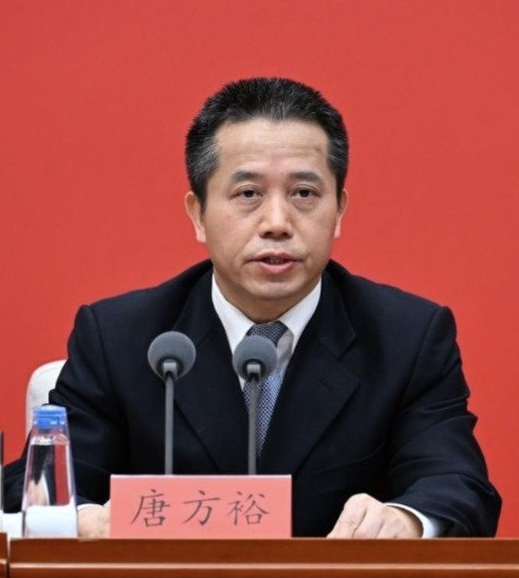
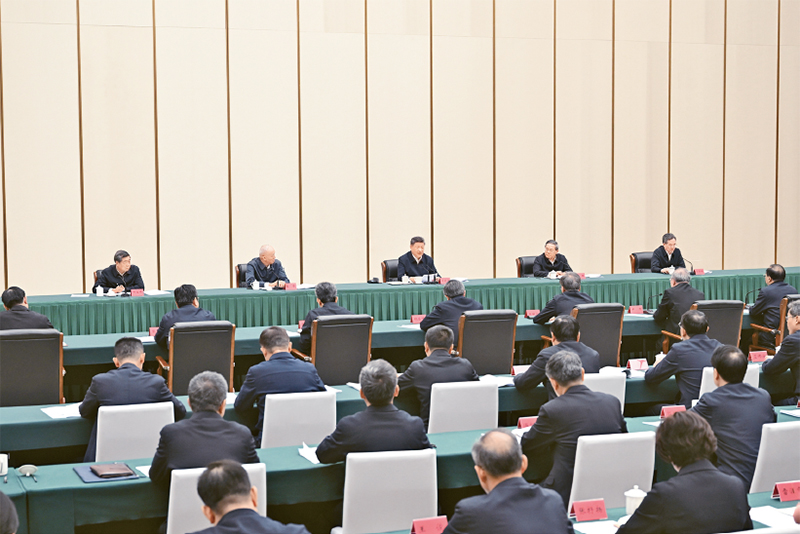
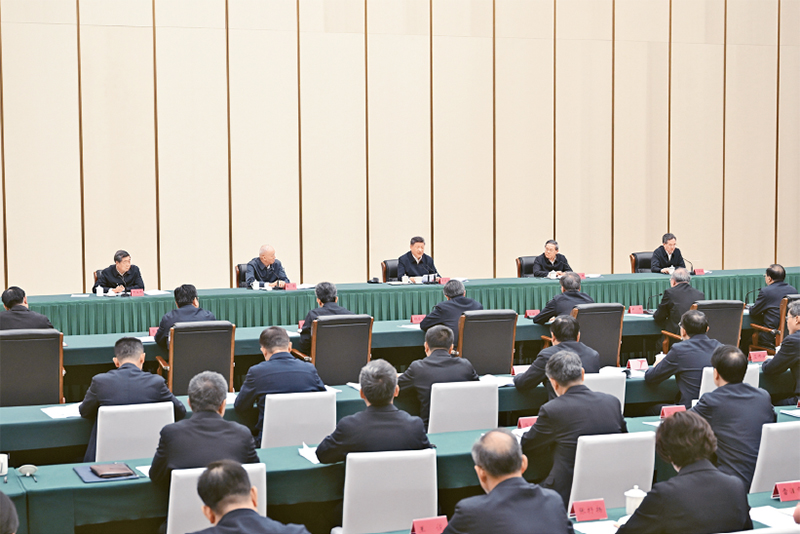
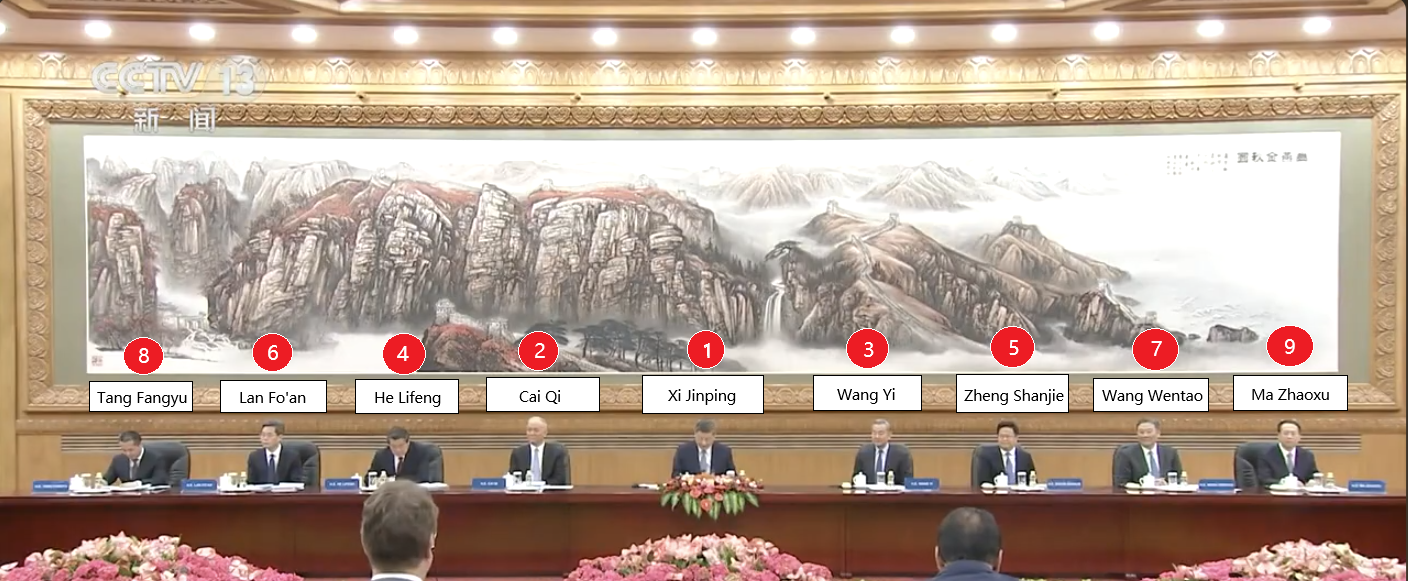
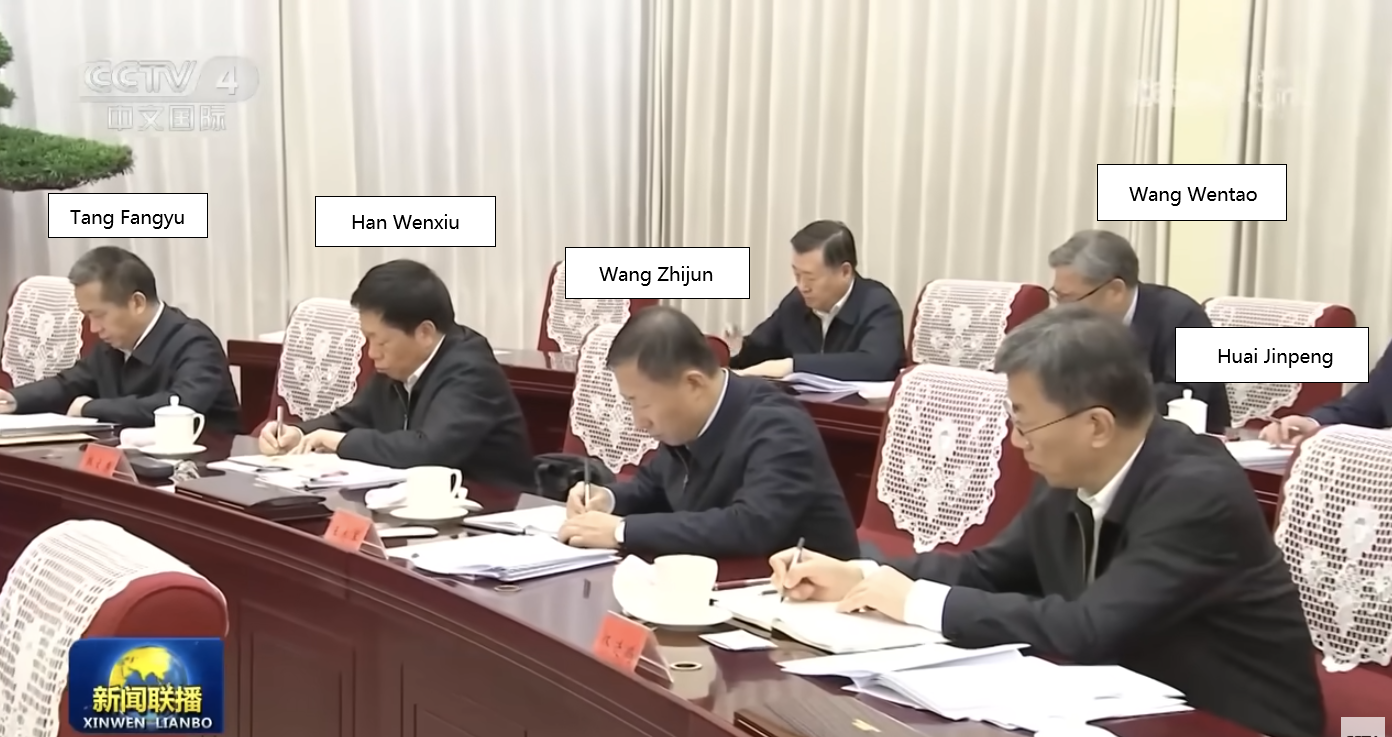
In the following images, we can see how understanding the relative ranks of top officials can indicate internal promotions. Specifically, public appearances of Chinese officials are seated according to rank, which allows astute observers to identify promotions or abnormal absences. The example we will use is Tang Fangyu, the newly promoted CPRO Director, who replaced incumbent CPRO Director Jiang Jinquan in late 2025.

Xi Jinping and officials meeting with international business representatives, March 28th, 2025

The image above shows a meeting on March 28th, 2025, whereby Xi Jinping and several top officials met with international business representatives in Beijing.9 The alternating seating arrangements clearly indicate the officials’ ranks. In descending order the officials are:

  1. Xi Jinping, CCP General Secretary (national level)
  2. Cai Qi, 5th-ranked member of the Politburo and First Secretary of the Central Secretariat (sub-national level)
  3. Wang Yi, Politburo member and Director of the Central Committee Foreign Affairs Commission (CFAC) Office (sub-national level)
  4. He Lifeng, Politburo member and Director of the Central Financial and Economic Affairs Commission (CFEAC) Office (sub-national level)
  5. Zheng Shanjie, Chairman of the National Development and Reform Commission (NDRC) (provincial/ministerial level)
  6. Lan Fo’an, Minister of Finance (provincial/ministerial level)
  7. Wang Wentao, Minister of Commerce (provincial/ministerial level)
  8. Tang Fangyu, Deputy Director of the Central Policy Research Office (CPRO) (provincial/ministerial level)
  9. Ma Zhaoxu, Executive Vice Minister of Foreign Affairs (MFA) (provincial/ministerial level)

There are several important learnings from the rankings above. Firstly, although Wang Yi and He Lifeng are both Politburo members, Wang Yi is ranked higher than He Lifeng simply because Wang’s surname contains fewer strokes. The relative rankings do not indicate the importance of the CFAC over CFEAC. The rankings of Zheng Shanjie, Lan Fo’an, and Wang Wentao are according to the ranks of the constitute departments of the State Council.10 The NDRC, Ministry of Finance, and Ministry of Commerce are ranked third, twelfth, and twentieth, respectively. Lastly, although both Tang Fangyu and Ma Zhaoxu are at the provincial/ministerial level, Tang Fangyu is ranked higher due to the relative ranking of the CPRO over the MFA.

Officials taking notes during a Politburo study session on December 8th, 2025

The image above is taken from CCTV footage released on December 8th, 2025, showing the attendees of a Politburo study session to discuss economic work for the upcoming year. From this footage we can see that Tang Fangyu is seated before several officials. These officials are:

  1. Tang Fangyu, Deputy (?) Director of the CPRO (provincial/ministerial level)
  2. Han Wenxiu, Executive Deputy Director of the CFEAC Office (provincial/ministerial level)
  3. Wang Zhijun, Executive Deputy Secretary-General of the State Council (provincial/ministerial level)
  4. Huai Jinpeng, Minister of Education (provincial/ministerial level)
  5. Wang Wentao, Minister of Commerce (provincial/ministerial level)

This seating arrangement indicates that Tang Fangyu has, as of December 8th, 2025, succeeded Jiang Jinquan as Director of the CPRO. To come to this conclusion, we must first determine that the seating arrangements are aligned with the officials’ ranks. Not shown in this image is Li Lecheng, Minister of the Ministry of Industry and Information Technology (MIIT), seated to the left of Huai Jinpeng. We see that the seating arrangement follows State Council department rankings as the Ministry of Education, MIIT, and Ministry of Commerce are ranked fourth, sixth, and twentieth, respectively. In contrast to the meeting eight months prior, we see that Tang Fangyu now occupies a higher rank compared to Wang Wentao and is seated ahead of all State Council Ministers. On January 14, 2026, CCTV first reported Tang Fangyu as the CPRO Director.11

Retirement age

In general, a higher civil service ranking is linked to a higher retirement age. For normal civil servants, the retirement age for men and women is 60 and 55, respectively. Officials at the sub-provincial/deputy-ministerial level, the retirement age is typically between 60 and 65. For provincial/ministerial level officials, the retirement age is 65 but can be extended by three years if the official passes retirement age during the posting. For sub-national level officials and national level officials, retirement age is typically set at 70 and 75, respectively.

An unspoken rule, “Seven-up-eight-down” (七上八下), regarding retirement age stipulation for Politburo members at the national and sub-national level was formed during the Deng Xiaoping era. This rule meant that, at the time of a National Party Congress, Central Committee or Politburo members who were aged 67 and under may be appointed new positions in the Politburo, whereas those aged 68 and over must retire. At the start of Xi Jinping’s third term, this rule was broken as Xi was 69 years old during the 20th Party Congress.

A similar convention existed since the 1990’s regarding Central Committee membership, known as the “Three-up-four-down” (三上四不上). This rule meant that officials at the age of 63 and during the National Party Congress could be elected into the Central Committee, whereas those aged 64 and older could not be considered. In practice, this unspoken rule contains many more exceptions.

Key terms
  • High-ranking cadres (高级干部 or 高干) — officials at the sub-provincial/deputy-ministerial level and above
  • Centrally-managed cadres (中管干部) — officials whose appointments, dismissals, and dossiers are managed by the Central Organization Department
  • Children of high-ranking cadres (高干子弟) — sons and daughters of high-ranking cadres
  • Top leader (一把手) — the top-ranked official in any jurisdiction

Notes:
  1. For more information on term limits of secretaries, see Central Organization Department. ↩︎
  2. “行政级别” (Administrative Levels), Baidu Baike. For more information see https://baike.baidu.com/item/行政级别/3545613 ↩︎
  3. For a full list of Discipline Inspection and Supervision Group members stationed in the Ministry of Emergency Management, see https://www.mem.gov.cn/jjz/ldxx/202508/t20250820_555612.shtml ↩︎
  4. “厅局级正职” (Department/Bureau Level), Baidu Baike. For more information see https://baike.baidu.com/item/%E5%8E%85%E5%B1%80%E7%BA%A7%E6%AD%A3%E8%81%8C/7942565 ↩︎
  5. Conventions are taken from the General Guidelines for the Use of English for Institutional Names and Professional Titles (组织机构,职务职称英文译写通则), issued by the Beijing Municipal Market Supervision and Administration Bureau. For more information see https://scjgj.beijing.gov.cn/hdjl/myzj/bzzxdyjzj/202011/P020250514383411510450.pdf ↩︎
  6. For more information on regulations regarding leadership secretaries see https://m.163.com/dy/article_cambrian/IUUKMRE60552XV67.html ↩︎
  7. Matt Ho, “China investigates former aide of Vice-President Wang Qishan for alleged corruption.” SCMP, October 2020, https://www.scmp.com/news/china/politics/article/3103988/china-probes-former-aide-vice-president-wang-qishan-alleged ↩︎
  8. “Analyzing the Purge of Wang Qishan Aide Dong Hong,” SinoInsider, October 11, 2020. https://sinoinsider.com/2020/10/analyzing-the-purge-of-wang-qishan-aide-dong-hong/ ↩︎
  9. This was first noticed by China watcher @cnpoliwatch (中国人事观察). For the original link see https://x.com/cnpoliwatch/status/1905587692207046945 ↩︎
  10. For more information on the ranks of the 26 constituent departments of the State Council, see https://en.wikipedia.org/wiki/Constituent_departments_of_the_State_Council ↩︎
  11. “总台举办学习宣传贯彻党的二十届四中全会精神宣讲报告会” CCTV. For more information see https://www.cctv.com/2026/01/14/ARTIspptXdHdzVDzznI6p64D260114.shtml ↩︎