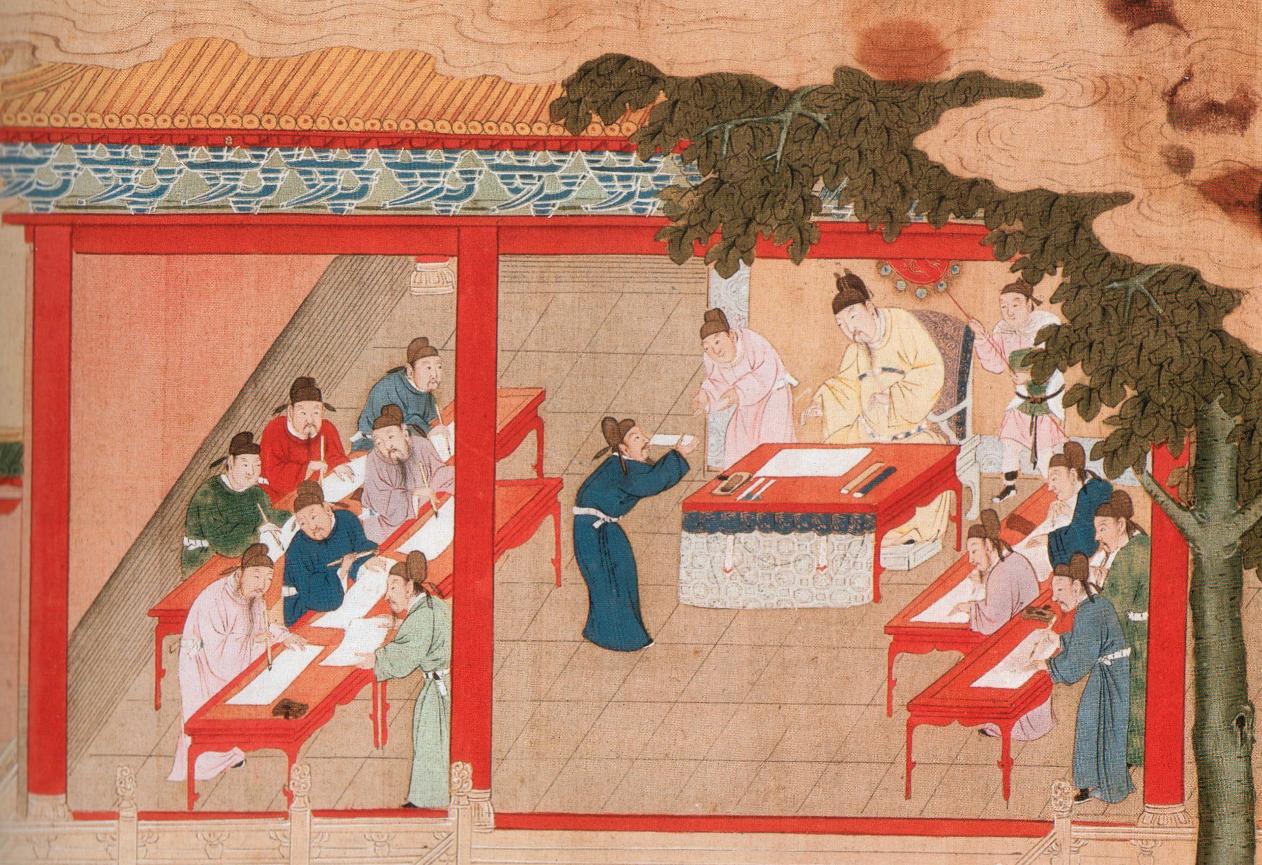
Civil service ranking in China is often an underexamined topic when analyzing Chinese politics. The current bureaucracy reflects an evolution of Chinese governance that dates back to the imperial dynasties and administrative ranks developed in the Han and subsequent dynasties. After the establishment of the PRC, the Chinese civil service system was built on the Soviet nomenklatura model with a few adaptations. To understand governance in modern China, one must have a solid grasp of the administrative structure and relative power of different positions within the Chinese bureaucracy.
Why is familiarity with civil service ranking important? Due to strict requirements for political advancements, any exceptions to the rule indicate a promising political trajectory, and vice versa. Additionally, civil service rankings can explain the movements of leadership secretaries, whereby secretaries faced with term limits are promoted into a higher rank and may still serve as a close confidant without the official designation.1
The table below outlines the five highest leadership ranks in the PRC.
National level (国家级正职)
The Politburo Standing Committee, a seven-member subset of the Politburo, represents the pinnacle of Chinese leadership. As such, all seven members are at the highest civil service ranking of national level.
Staple positions at the national level include the top leader (一把手) within the “Five Leading Organs” (五大班子). These are the General Secretary of the CCP, the Premier of the State Council, the Chairman of the National People’s Congress (NPC), the Chairman of the Chinese People’s Political Consultative Conference (CPPCC), and the Chairman of the Central Military Commission (CMC). Since Jiang Zemin, the General Secretary of the CCP has concurrently served as the Chairman of the CMC with the exception of a two-year gap during the Jiang-Hu handover in 2002.
Within both the 19th and 20th Politburo Standing Committees, the remaining positions within the Standing Committee are the First-ranked Secretary of the Secretariat, the First-ranked Vice Premier of the State Council, and the Secretary of the Central Commission for Discipline Inspection (CCDI). Notably, the rankings of the First-ranked Vice Premier and Secretary of the CCDI fluctuated over the past two decades. In both the 18th and 19th Politburo Standing Committee, the CCDI Secretary was the 6th-ranked member and the First-ranked Vice Premier was the 7th-ranked member. This order is reversed in the 16th, 17th, and 20th Politburo Standing Committees, signaling priority shifts between economic growth and corruption crackdown. Crucially, this indicates that political rankings at the highest level can indicate national priority preferences, such as whether top leadership is focused on economic growth or anti-corruption crackdowns.
Since Xi Jinping’s first term (2012-2017), a key position that was demoted from the Politburo Standing Committee to the Politburo was the Secretary of the Central Political and Legal Affairs Commission (CPLC), a powerful organization that oversees the country’s security apparatus, including the Ministry of Public Security, Ministry of State Security, and the People’s Armed Police. This demotion was due in large part to the purge of former CPLC Secretary Zhou Yongkang, whose control over the internal security apparatus raised concerns within the Chinese leadership.
Sub-National level (国家级副职)
The sub-national level consists of all non-Standing Committee Politburo members, Central Secretariat members, State Council Vice Premiers and State Councilors, CMC Vice Chairmen, NPC Vice Chairmen, CPPCC Vice Chairmen, the Director of the National Supervisory Commission, the President of the Supreme People’s Court, and the Procurator-General of the Supreme People’s Procuratorate.
An interesting case is the 8th-ranked official, Han Zheng who, despite occupying a sub-national level post as Vice President, continues to enjoy national-level privileges as a former member of the 19th Politburo Standing Committee.
Provincial/Ministerial level (省部级正职)
Although there are no written requirements, all civilians within the roughly two hundred full members of the CCP Central Committee are at the provincial/ministerial level or higher based on the positions they hold within the Party and the government. Notably, there are numerous officials at the provincial/ministerial-level who are not full or alternate members of the Central Committee. One such example is sub-national level official Jiang Xinzhi, who served as the Deputy-Head of the Central Organization Department (provincial/ministerial level) and is a current Vice Chairman of the CPPCC. Other important positions, such as the Group Leaders for Inspection Work (巡视组组长) under the Central Leading Group for Inspection Work and the Director of the Central Policy Research Office (CPRO), are also at the provincial/ministerial level due to the positions’ significance.
There are essentially three cohorts of provincial-ministerial level officials:
- At the provincial level, the top-ranked leader of the “Four Leading Organs” (四套班子), the Provincial Party Secretary, Governor, Provincial People’s Congress Chair, and the Provincial CPPCC Chair, in each of China’s 31 provinces are at the provincial-ministerial level.
- Within the State Council, the top-ranked leader of State Council ministries and commissions, heads of major state institutions such as the People’s Bank of China and the National Audit Office, as well as top-ranked official in centrally-managed state-owned enterprises
- Within the Central Party apparatus, for departments where the top leader is at national or sub-national level, the deputy position is at provincial-ministerial level. Examples include the deputy-heads of the Central Organization Department, Central Publicity Department, United Front Work Department. In special cases where a lower-ranked department is of exceptional importance, such as the CCP Central Committee General Office, the Deputy Director is also at the provincial-ministerial level.
Sub-Provincial/Deputy-Ministerial level (省部级副职)
The sub-provincial/deputy-ministerial level is a critical milestone in the careers of Chinese bureaucrats. Officials above this rank are referred to as “high-ranking cadres” (高级干部). Apart from a select few highly important department/bureau level positions, the Central Organization Department manages appointments, dismissals, and dossiers of all cadres above the sub-provincial/deputy-ministerial level. As such, all Chinese officials above the sub-provincial/deputy-ministerial level are referred to as centrally-managed cadres (中管干部).
The vast majority of civilian alternate members of the Central Committee are at the sub-provincial/deputy-ministerial level. Following the logic of the three cohorts outlined above, the deputy positions of these provinces, ministries, and offices are necessarily at the sub-provincial/deputy-ministerial level.
Department/bureau level and below
Below the sub-provincial and deputy-ministerial level, civil service rankings are organized in a dual-track system that consists of the following: leadership civil servants (公务员领导职务) and generalist civil servants (综合管理类公务员).2
Department/Bureau level (厅局级正职)
The department/bureau level encompasses a broad spectrum of officials. Examples of department/bureau level posts include division chiefs within central ministries and departments of the CCPCC and State Council, sub-provincial level city deputy leaders, prefecture-level city party and government heads, as well as deputy positions within deputy-ministerial level state-owned enterprises.
Leadership civil servants and generalist civil servants can occupy the same civil service rank. To better understand this concept of rank equivalence, we can look at the example of a Discipline Inspection and Supervision Group (中央巡视组), subordinate to the CCDI, stationed in the Ministry of Emergency Management. From open source information, as of August 2025 the Discipline Inspection and Supervision Group consisted of the following members:3
- Pu Yufei, Head of the Discipline Inspection and Supervision Group stationed at the Ministry (department/bureau-level)
- Qiao Yinghong, Deputy Head of Discipline Inspection and Supervision Group stationed at the Ministry (department/bureau-level)
- Ding Yi, Deputy Head of Discipline Inspection and Supervision Group stationed at the Ministry (level 1 bureau rank official)
- Liu Xiaoxiao, Deputy Head of Discipline Inspection and Supervision Group stationed at the Ministry (level 1 bureau rank official)
Note that all four of the above officials occupy the same civil service rank. The difference is that Pu Yufei and Qiao Yinghong are considered leadership civil servants whereas Ding Yi and Liu Xiaoxiao are generalist civil servants. To highlight the importance and power of Discipline Inspection and Supervision Groups, all four officials occupy the same rank as a municipal Party Secretary in a non-Provincial-level city. Whereas Inspection Group leaders may not manage any personnel at all, they ostensibly hold more power than a municipal Party Secretary who governs millions of civilians.
The following table compares the leadership positions at the department/bureau level and below with the minimum equivalent ranks for generalist civil servants.
| Leadership Positions (Sub-Department level and below) | Minimum Equivalent Generalist Civil Service Rank |
| Department/Bureau level (厅局级正职) | Level 1 Bureau Rank Official (一级巡视员) |
| Deputy Department/Bureau level (厅局级副职) | Level 2 Bureau Rank Official (二级巡视员) |
| County/Division level (县处级正职) | Level 2 Division Rank Official (二级调研员) |
| Deputy County/Division level (县处级副职) | Level 4 Division Rank Official (四级调研员) |
| Township/Section level (乡科级正职) | Level 2 Principal Staff Member (二级主任科员) |
| Deputy Township/Section level (乡科级副职) | Level 4 Principal Staff Member (四级主任科员) |
Promotions of Generalist Civil Servants
According to Baidu Baike, the average time required for a staff member to reach the department/bureau level is 25 years and the average age of a department/bureau level cadre is 55.4 This benchmark is a useful guideline to measure the speed at which cadres are promoted. China watchers pay particular attention to cadres who are promoted faster than average, often indicating strong political patronage and/or achievements.
There are a total of twelve levels for generalist civil servants. Notably, civil service rankings below deputy department/bureau-level are often mistranslated as “inspectors” or “investigators” in the cases of “巡视员” and “调研员,” respectively.5 The table below outlines each rank and requirements for advancement.
| Generalist Civil Service Rank | Basic Requirements |
| Level 1 Bureau Rank Official (一级巡视员) | At least four years at Deputy Department/Bureau-level or as Level 2 Bureau Rank Official |
| Level 2 Bureau Rank Official (二级巡视员) | At least four years as Level 1 Division Rank Official |
| Level 1 Division Rank Official (一级调研员) | At least three years at County/Division-level or as Level 2 Division Rank Official |
| Level 2 Division Rank Official (二级调研员) | At least two years as Level 3 Division Rank Official |
| Level 3 Division Rank Official (三级调研员) | At least two years at Deputy County/Division-level or as Level 4 Division Rank Official |
| Level 4 Division Rank Official (四级调研员) | At least two years as Level 1 Principal Staff Member |
| Level 1 Principal Staff Member (一级主任科员) | At least two years at Township/Section-level or as Level 2 Principal Staff Member |
| Level 2 Principal Staff Member (二级主任科员) | At least two years as Level 3 Principal Staff Member |
| Level 3 Principal Staff Member (三级主任科员) | At least two years at Deputy Township/Section-level or as Level 4 Principal Staff Member |
| Level 4 Principal Staff Member (四级主任科员) | At least two years as Level 1 Staff Member |
| Level 1 Staff Member (一级科员) | At least two years as Level 2 Staff Member |
| Level 2 Staff Member (二级科员) | |
Highest applicable rank
In cases where leadership cadres hold multiple positions, the highest applicable rank applies. Cadres with political patronage are sometimes appointed a higher-ranking ceremonial position to enhance their status and benefits.
It is important to note that some individuals hold several positions of various ranks. In such cases, the concept of “highest applicable rank” applies and the cadre receives salaries and benefits associated with the highest civil service rank. Leadership cadres holding multiple positions concurrently usually indicates higher trust and decision-making influence within the PRC. Another scenario is where leadership cadres past the conventional retirement age are appointed higher-ranking ceremonial positions within the NPC and CPPCC to enhance their status and benefits.
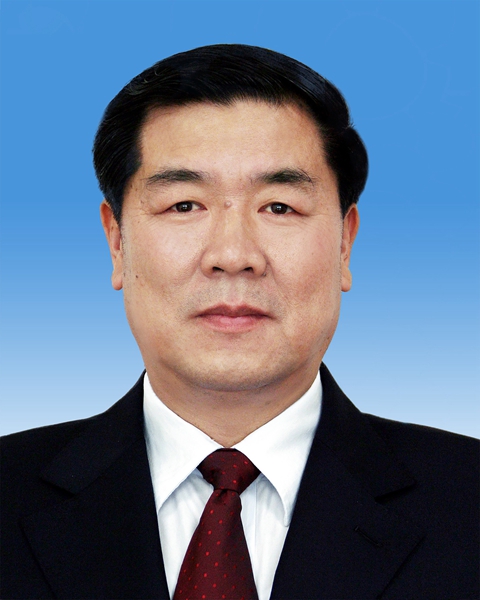
The clearest example that illustrates this point is the concurrent positions held by He Lifeng between 2018 and 2023. He was simultaneously the Chairman of the National Development and Reform Commission (provincial/ministerial level) and a Vice Chairman of the CPPCC (sub-national level). He undoubtedly spent the majority of his time dedicated to the NDRC while enjoying benefits associated with a higher ranking. He Lifeng is widely regarded as a close confidant of Xi Jinping and much of his political ascension is linked to the working relationships developed while the two were serving in Fujian. In 2023, at the conventional retirement age of 68, He Lifeng was once again promoted as Vice Premier and the Director of the Office of the Central Financial and Economic Affairs Commission.
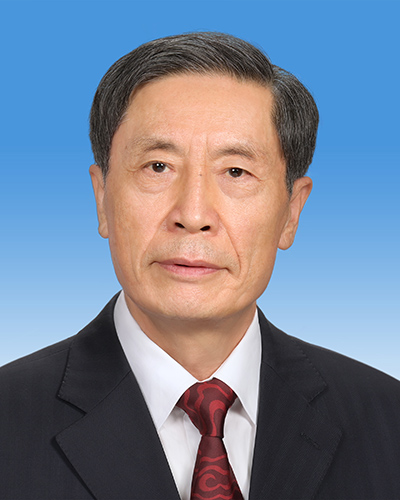
Another example is Jiang Xinzhi, who served as former Executive Deputy-Head (常务副部长) of the Central Organization Department (provincial/ministerial level) from 2017 to 2024 and who was also a Vice Chairman of the CPPCC from 2023 onwards. Jiang Xinzhi’s appointment as Vice Chairman of the CPPCC is likely due to his surpassing the provincial/ministerial level retirement age of 65. The Executive Deputy-Head of the Central Organization Department is an important position that has influence over key personnel decisions. Jiang Xinzhi has spent decades working in personnel management, beginning in Gansu. His rise is largely associated with the former Central Organization Department Head Chen Xi.
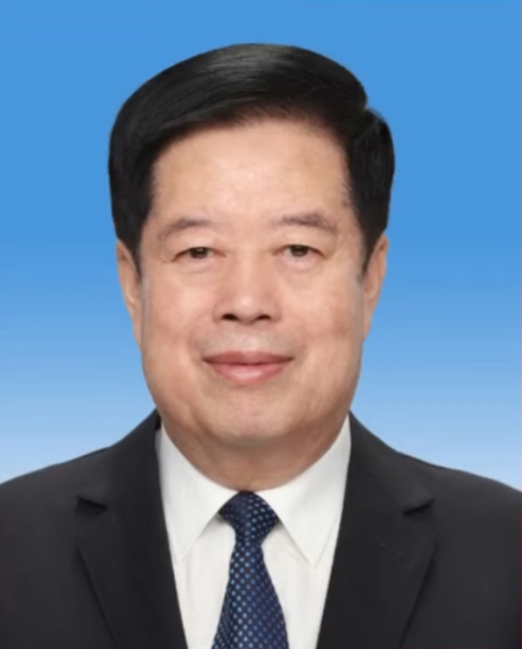
The last example is Liu Jinguo, who has served as Deputy Secretary of the CCDI (provincial/ministerial level) since 2014. Liu concurrently holds two other higher ranked positions as Director of the National Supervisory Commission (NSC) and Secretary of the Central Secretariat, both at the sub-national level. Despite being at the age of 67, Liu Jinguo was appointed as Director of the NSC in 2023. Liu Jinguo’s portfolio indicates tremendous influence over the Party’s disciplinary investigations of high-ranking cadres.
Leadership secretaries
According to stipulations by the Central Organization Department, only leadership cadres above the sub-provincial/deputy-ministerial level are permitted to have secretaries in a formal capacity. In practice, almost all leadership civil servants at or below the department/bureau level have assistants that serve secretarial functions as the director or secretary-general of the department’s general office. Strictly speaking, these assistants cannot be referred to as secretaries in official documents or announcements.
Leadership secretaries are subject to civil service ranking and term limit requirements. Secretaries of provincial/ministerial level officials cannot exceed the deputy department/bureau level and secretaries of sub-provincial/deputy-ministerial level officials cannot exceed the county/division level.6 Typically, secretaries of sub-provincial/deputy-ministerial level officials can serve a maximum of five years unless otherwise approved by the Central Organization Department.
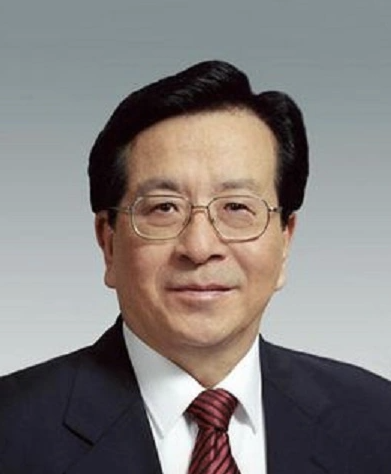
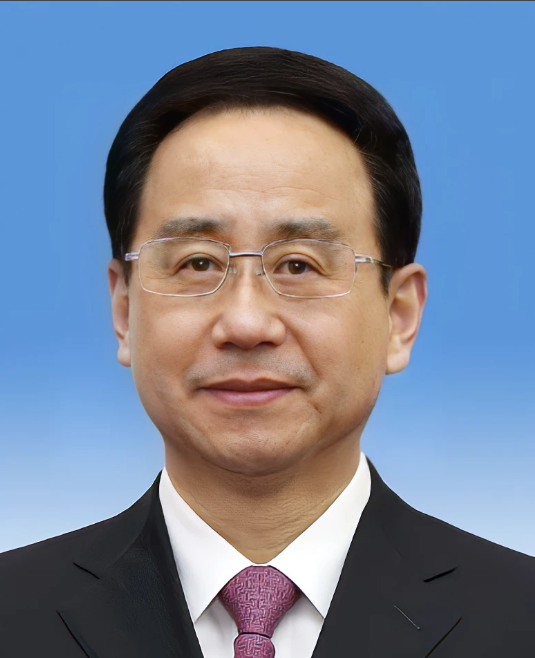
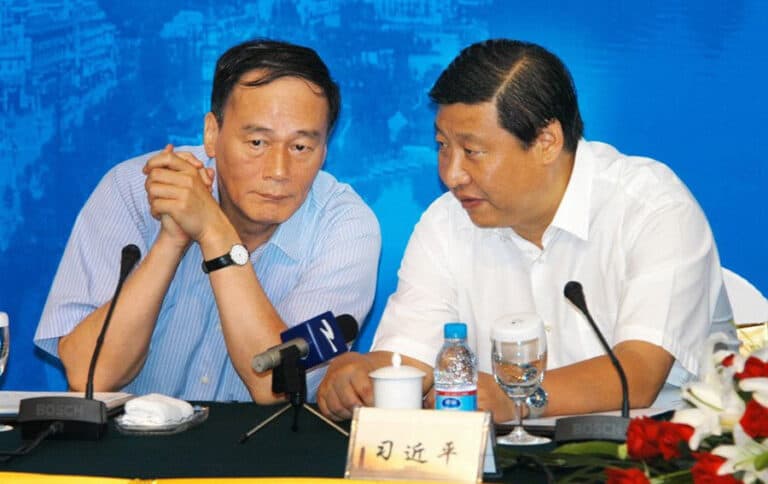
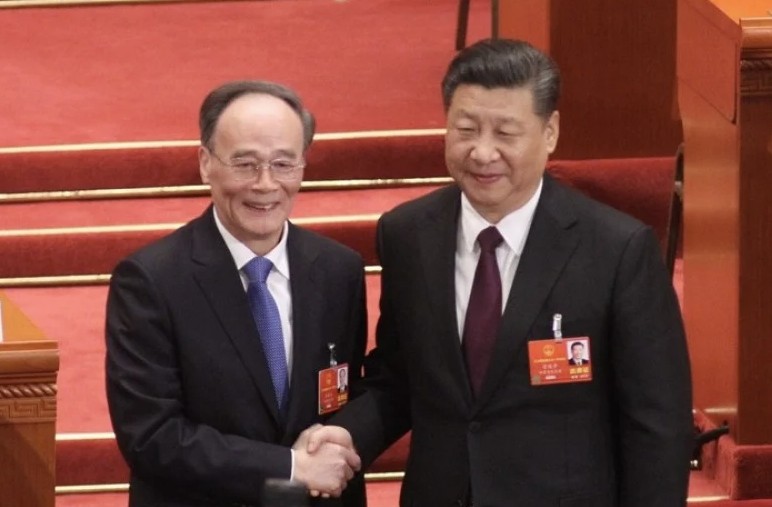
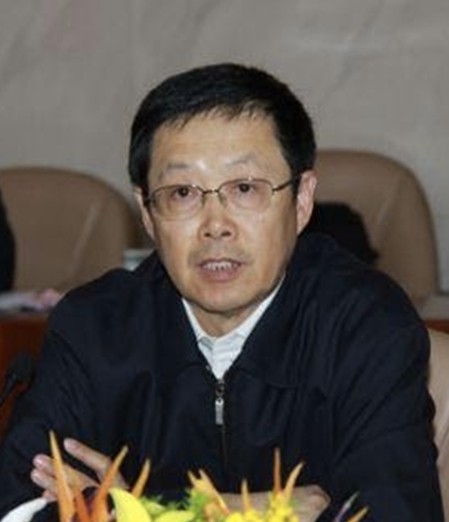
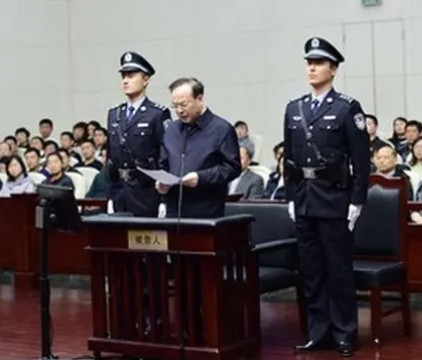
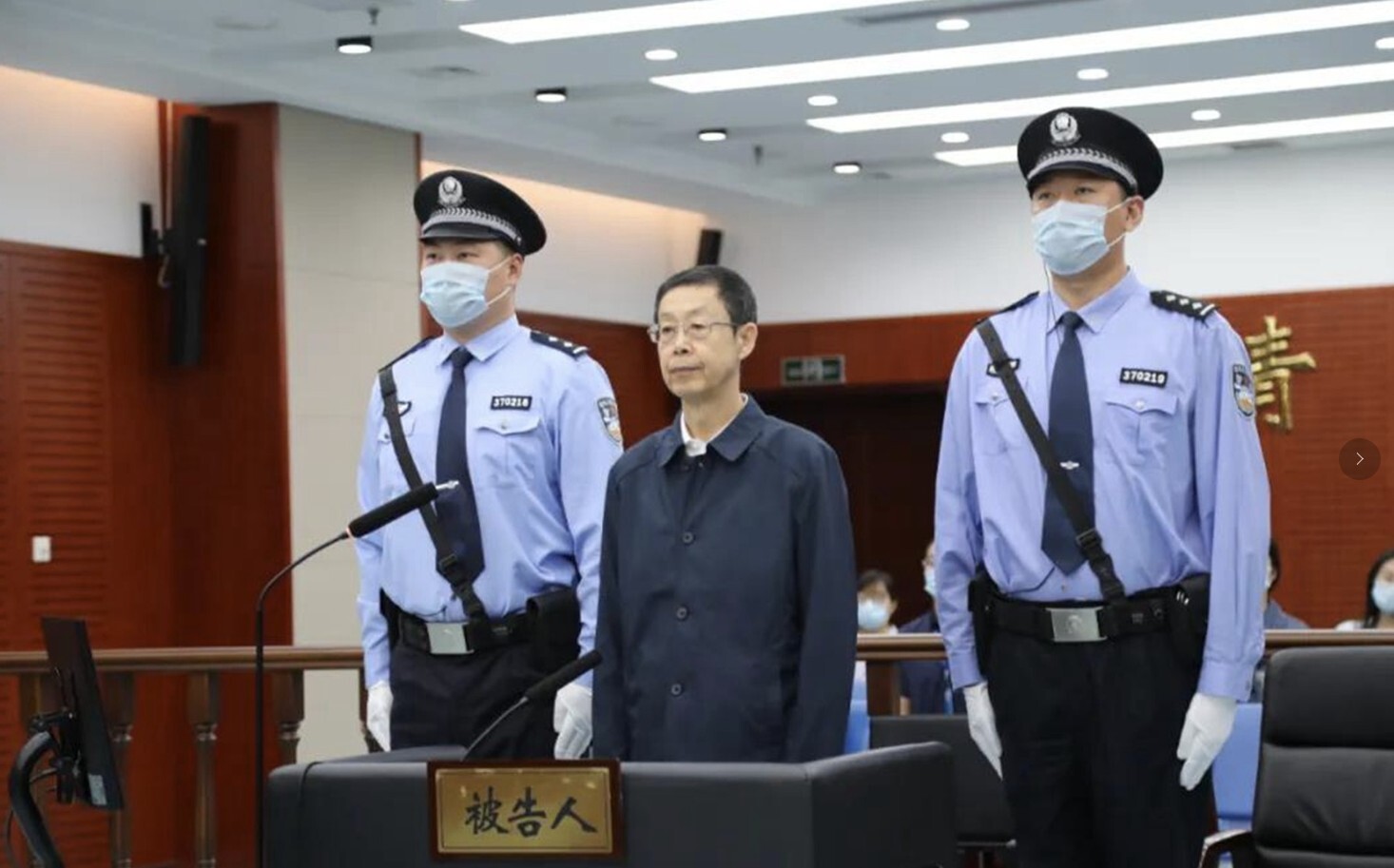
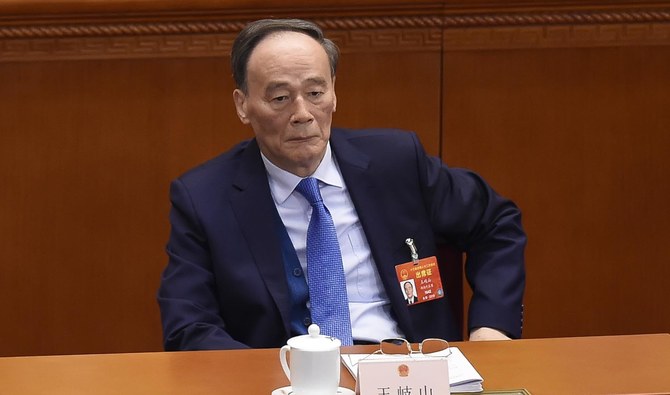
Left: Dong Hong appearing in court. Right: Wang Qishan
Knowledge of these requirements has interesting applications in analyzing Chinese politics. In October 2020, CCDI announced an investigation into Dong Hong, a former aide of CCDI Secretary Wang Qishan.7 One article argues that, despite a widely believed patron-client relationship between Dong Hong and Wang Qishan, the two were not as closely linked since Dong Hong did not serve as Wang Qishan’s formal secretary.8 A closer look reveals that while Wang Qishan ascended to the 17th Politburo as Executive Vice Premier in 2008 (sub-national level) and as CCDI Secretary (national level) in the 18th Politburo, Dong Hong was already at the sub-provincial/deputy-ministerial level as the Group Leader of the 12th Central Inspection Group from 2014 to 2015. Therefore, Dong Hong was ineligible to serve as Wang Qishan’s secretary in an official capacity. Nevertheless, Dong Hong’s appointment in a key position within the CCDI in a time that overlapped with Wang Qishan-led anti-corruption campaign suggests a strong patron-client relationship, especially given the two’s well-documented work history.
Analyzing seating arrangements
Seating arrangements can indicate promotions or demotions prior to official announcements.
Due to the opacity of the Chinese political system, China watchers have long been using seating arrangements in publicized meetings to determine promotions. For prominent public-facing positions such as Provincial Party Secretaries, State Council Ministers, and Politburo members, personnel appointments and dismissals are either made public or quickly noticed by the casual observer. For other lower-ranked but equally important departments such as the Central Committee General Office and the Central Policy Research Office, personnel movements are often unannounced until several months after the fact.
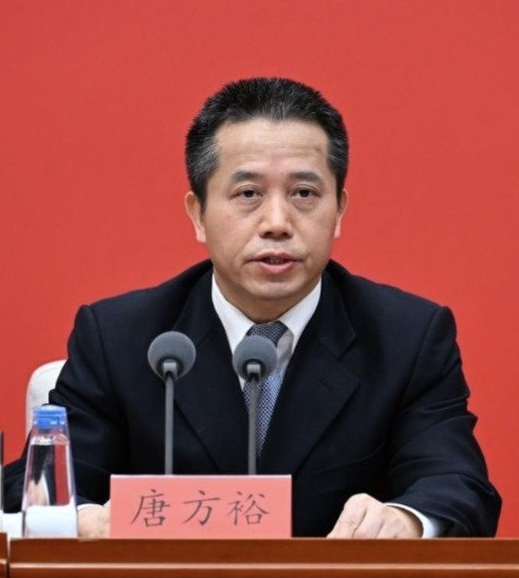
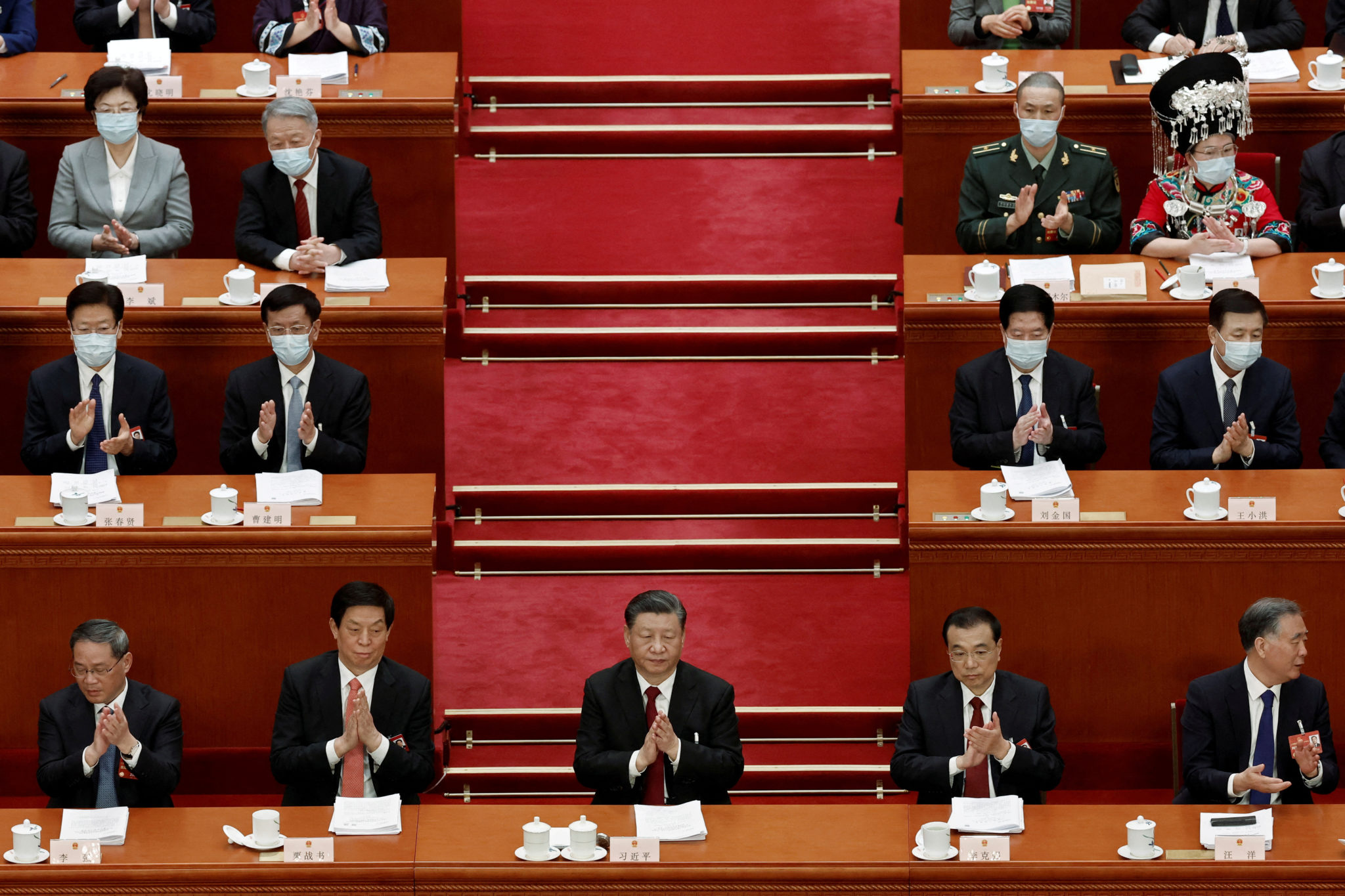
In the following images, we can see how understanding the relative ranks of top officials can indicate internal promotions. Specifically, public appearances of Chinese officials are seated according to rank, which allows astute observers to identify promotions or abnormal absences. The example we will use is Tang Fangyu, the newly promoted CPRO Director, who replaced incumbent CPRO Director Jiang Jinquan in late 2025.
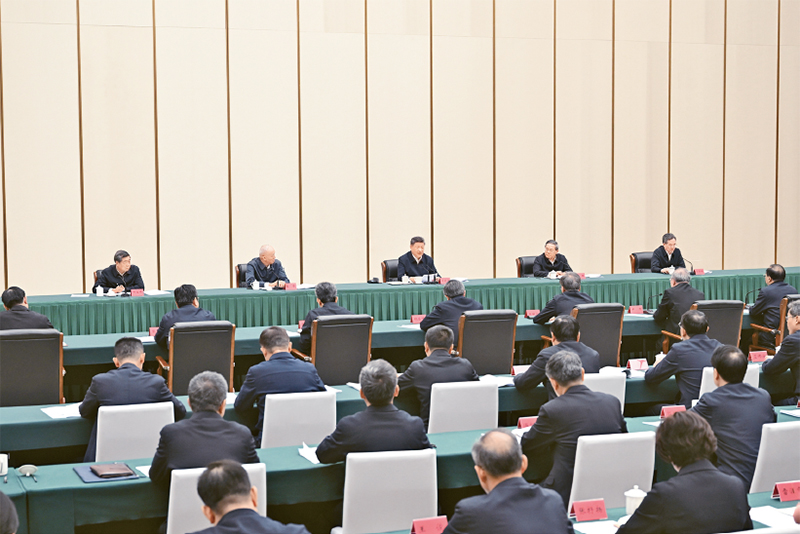
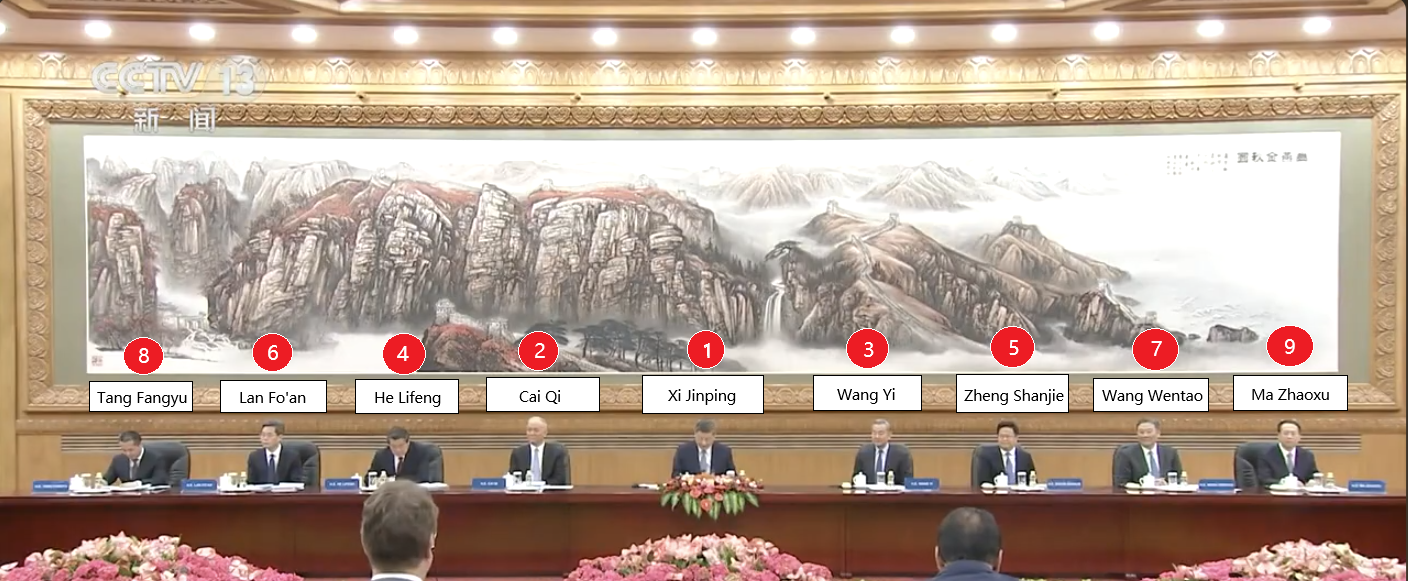
Xi Jinping and officials meeting with international business representatives, March 28th, 2025
The image above shows a meeting on March 28th, 2025, whereby Xi Jinping and several top officials met with international business representatives in Beijing.9 The alternating seating arrangements clearly indicate the officials’ ranks. In descending order the officials are:
- Xi Jinping, CCP General Secretary (national level)
- Cai Qi, 5th-ranked member of the Politburo and First Secretary of the Central Secretariat (sub-national level)
- Wang Yi, Politburo member and Director of the Central Committee Foreign Affairs Commission (CFAC) Office (sub-national level)
- He Lifeng, Politburo member and Director of the Central Financial and Economic Affairs Commission (CFEAC) Office (sub-national level)
- Zheng Shanjie, Chairman of the National Development and Reform Commission (NDRC) (provincial/ministerial level)
- Lan Fo’an, Minister of Finance (provincial/ministerial level)
- Wang Wentao, Minister of Commerce (provincial/ministerial level)
- Tang Fangyu, Deputy Director of the Central Policy Research Office (CPRO) (provincial/ministerial level)
- Ma Zhaoxu, Executive Vice Minister of Foreign Affairs (MFA) (provincial/ministerial level)
There are several important learnings from the rankings above. Firstly, although Wang Yi and He Lifeng are both Politburo members, Wang Yi is ranked higher than He Lifeng simply because Wang’s surname contains fewer strokes. The relative rankings do not indicate the importance of the CFAC over CFEAC. The rankings of Zheng Shanjie, Lan Fo’an, and Wang Wentao are according to the ranks of the constituent departments of the State Council.10 The NDRC, Ministry of Finance, and Ministry of Commerce are ranked third, twelfth, and twentieth, respectively. Lastly, although both Tang Fangyu and Ma Zhaoxu are at the provincial/ministerial level, Tang Fangyu is ranked higher due to the relative ranking of the CPRO over the MFA.
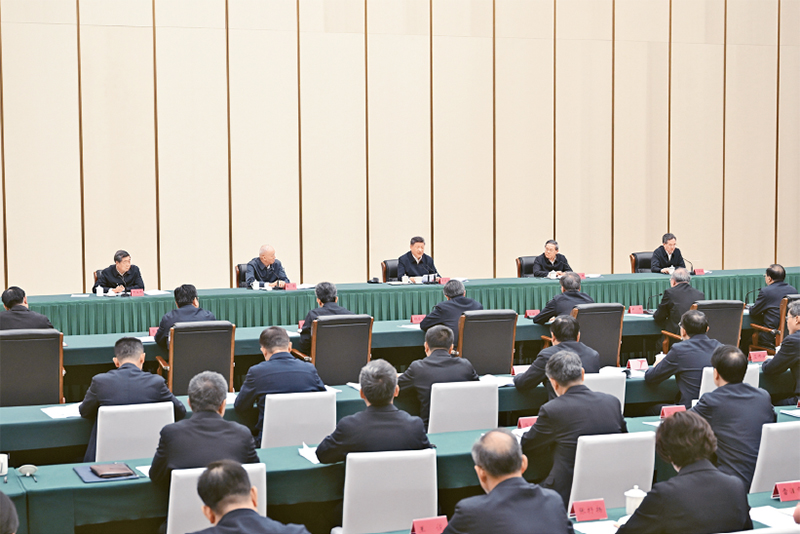
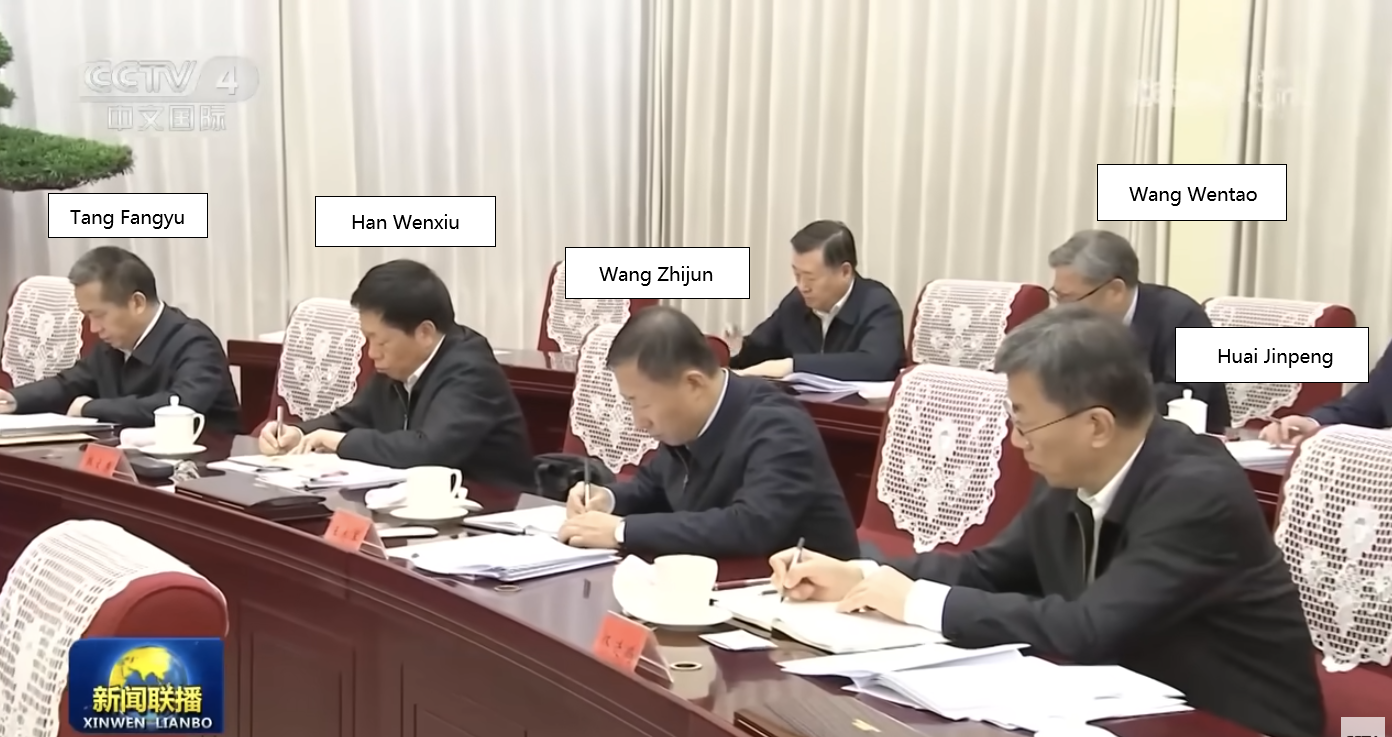
Officials taking notes during a Politburo study session on December 8th, 2025
The image above is taken from CCTV footage released on December 8th, 2025, showing the attendees of a Politburo study session to discuss economic work for the upcoming year. From this footage we can see that Tang Fangyu is seated before several officials. These officials are:
- Tang Fangyu, Deputy (?) Director of the CPRO (provincial/ministerial level)
- Han Wenxiu, Executive Deputy Director of the CFEAC Office (provincial/ministerial level)
- Wang Zhijun, Executive Deputy Secretary-General of the State Council (provincial/ministerial level)
- Huai Jinpeng, Minister of Education (provincial/ministerial level)
- Wang Wentao, Minister of Commerce (provincial/ministerial level)
This seating arrangement indicates that Tang Fangyu has, as of December 8th, 2025, succeeded Jiang Jinquan as Director of the CPRO. To come to this conclusion, we must first determine that the seating arrangements are aligned with the officials’ ranks. Not shown in this image is Li Lecheng, Minister of the Ministry of Industry and Information Technology (MIIT), seated to the left of Huai Jinpeng. We see that the seating arrangement follows State Council department rankings as the Ministry of Education, MIIT, and Ministry of Commerce are ranked fourth, sixth, and twentieth, respectively. In contrast to the meeting eight months prior, we see that Tang Fangyu now occupies a higher rank compared to Wang Wentao and is seated ahead of all State Council Ministers. On January 14, 2026, CCTV first reported Tang Fangyu as the CPRO Director.11
Retirement age
In general, a higher civil service ranking is linked to a higher retirement age. For normal civil servants, the retirement age for men and women is 60 and 55, respectively. Officials at the sub-provincial/deputy-ministerial level, the retirement age is typically between 60 and 65. For provincial/ministerial level officials, the retirement age is 65 but can be extended by three years if the official passes retirement age during the posting. For sub-national level officials and national level officials, retirement age is typically set at 70 and 75, respectively.
An unspoken rule, “Seven-up-eight-down” (七上八下), regarding retirement age stipulation for Politburo members at the national and sub-national level was formed during the Deng Xiaoping era. This rule meant that, at the time of a National Party Congress, Central Committee or Politburo members who were aged 67 and under may be appointed new positions in the Politburo, whereas those aged 68 and over must retire. At the start of Xi Jinping’s third term, this rule was broken as Xi was 69 years old during the 20th Party Congress.
A similar convention existed since the 1990’s regarding Central Committee membership, known as the “Three-up-four-down” (三上四不上). This rule meant that officials at the age of 63 and during the National Party Congress could be elected into the Central Committee, whereas those aged 64 and older could not be considered. In practice, this unspoken rule contains many more exceptions.
Key terms
- High-ranking cadres (高级干部 or 高干) — officials at the sub-provincial/deputy-ministerial level and above
- Centrally-managed cadres (中管干部) — officials whose appointments, dismissals, and dossiers are managed by the Central Organization Department
- Children of high-ranking cadres (高干子弟) — sons and daughters of high-ranking cadres
- Top leader (一把手) — the top-ranked official in any jurisdiction