
Correct View of Political Achievements and China’s Shift Away from GDP as a Promotional Metric
Taken together, the messaging from the 15th Five-Year Plan and the Notice on “Carrying Out Education on Establishing and Practicing a Correct View of Political Achievements Throughout the Party” signals that GDP growth should no longer be the dominant metric by which local officials are promoted.
Key Takeaway
- The logic of China’s personnel management system produces a zero-sum “promotion tournament” model of competition among local officials, requiring a metric by which officials are measured and winners promoted. The education campaign on the “correct view of political achievements” is an attempt to de-emphasize GDP growth as that metric. To complete this shift, central leadership must clearly signal a replacement metric for officials to strive toward.
Background
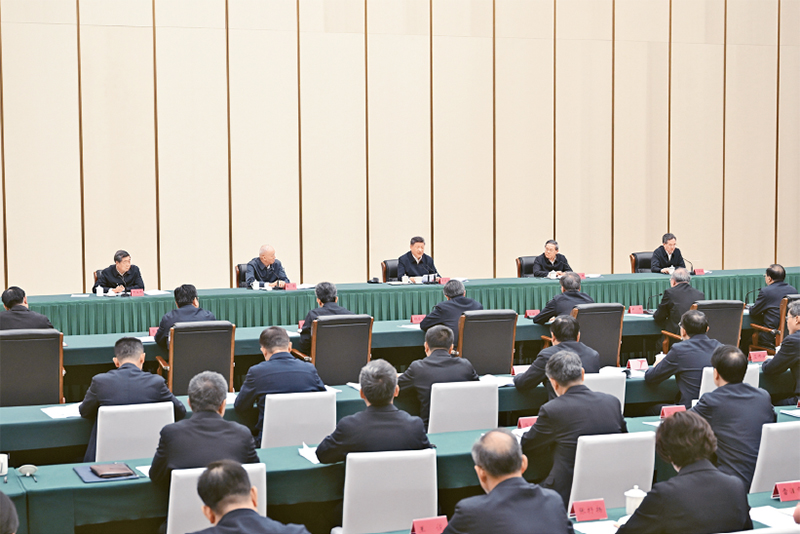
On February 23, 2026, the General Office of the CCP Central Committee issued a formal notice (hereafter referred to as the Notice) on “Carrying Out Education on Establishing and Practicing a Correct View of Political Achievements Throughout the Party.”1 The Notice specifies a period of five months whereby leadership cadres above the county/division level2 of each jurisdiction, especially the “top leader” (一把手), have to partake in the education campaign on the “correct view of political achievements.”
Several days after the Notice was issued, the CCP Politburo held a meeting on February 27, 2026, to discuss the draft outline of China’s 15th Five-Year Plan, to be reviewed and approved by the National People’s Congress in March 2026.3 Unlike the 14th Five-Year Plan, which did not set a GDP target due to lingering uncertainty from COVID-19, the 15th Five-Year Plan announced expected annual GDP growth of 4.5-5%, noticeably lower than the average annual GDP growth rate of 5.4% during the 14th Five-Year Plan period.4
Taken together, the messaging from the 15th Five-Year Plan and the Notice signals that GDP growth should no longer be the dominant metric by which officials are promoted. In the following sections, we explain the logic of personnel management in China, downsides of GDP as a performance metric, and alternative measures the central leadership might take to replace GDP as a metric.
The “Promotion Tournament” model and personnel management
A defining feature of the “Promotion Tournament” model is that career advancement for Chinese officials becomes a zero-sum game.
Since the 1980s and China’s pursuit of reform and opening up, fiscal decentralization reforms have granted local governments increasing autonomy over economic management and residual claims over revenue. As China’s economy follows an M-form structure in which the economy of each province is self-contained, these changes incentivize local governments to pursue economic growth independently. This structure allowed central leadership to evaluate provinces as parallel units, with GDP growth as a metric for comparison. Studies on the rural Chinese economy by Susan Whiting and others have found a positive correlation between local cadre promotion and economic growth, indicating that economic performance was a major factor to career advancement. With this recognition, local cadres began to compete on economic output. In 2004, Peking University Professor Zhou Li-An famously coined this phenomenon as the “political tournament” (政治锦标赛) or “promotion tournament” (晋升锦标赛) model.5 Understanding how personnel management works in the Chinese system helps explain why this “promotion tournament” dynamic exists in the first place.
Starting in 1984, China has adopted a “one-level down” (下管一级) management of personnel, whereby the Organization Department at each level manages the appointment of cadres one civil service rank below. Under this system, the Provincial Organization Department appoints cadres at the department/bureau level within the province and the Central Organization Department predominantly manages cadres at the sub-provincial/deputy-ministerial level and above.6 At each civil service level, a number of candidates vie for the same position — for example, there may be a handful of County Party Secretaries at the county/division level (县处级) competing for a single deputy department/sub-bureau level (副厅局级) opening on a municipal Party Standing Committee. The “promotion tournament” model of competition was especially prominent once GDP performance became the deciding factor among candidates who were otherwise similarly qualified. A defining feature of this model is that career advancement for Chinese officials becomes a zero-sum game.
Imperial examination in dynastic China.
Another key feature of China’s personnel management system is the cross-regional appointments of promoted officials. Officials who are promoted are often appointed in a different county, municipality, or province, depending on their rank. The rationale for this is twofold: firstly, cadres can potentially gain valuable experience in a different operating environment. Secondly, and perhaps more importantly, cross-regional transfers prevent local power bases from forming. Studies have shown, however, that there are major drawbacks to this system of official rotation.7 Turnover of municipal- and provincial-level officials resulted in significant negative effects on the economic growth rate within the city or province. This likely occurs due to the uncertainty and unfamiliarity of incoming officials, who are often faced with substantial local debts taken by the previous administration.
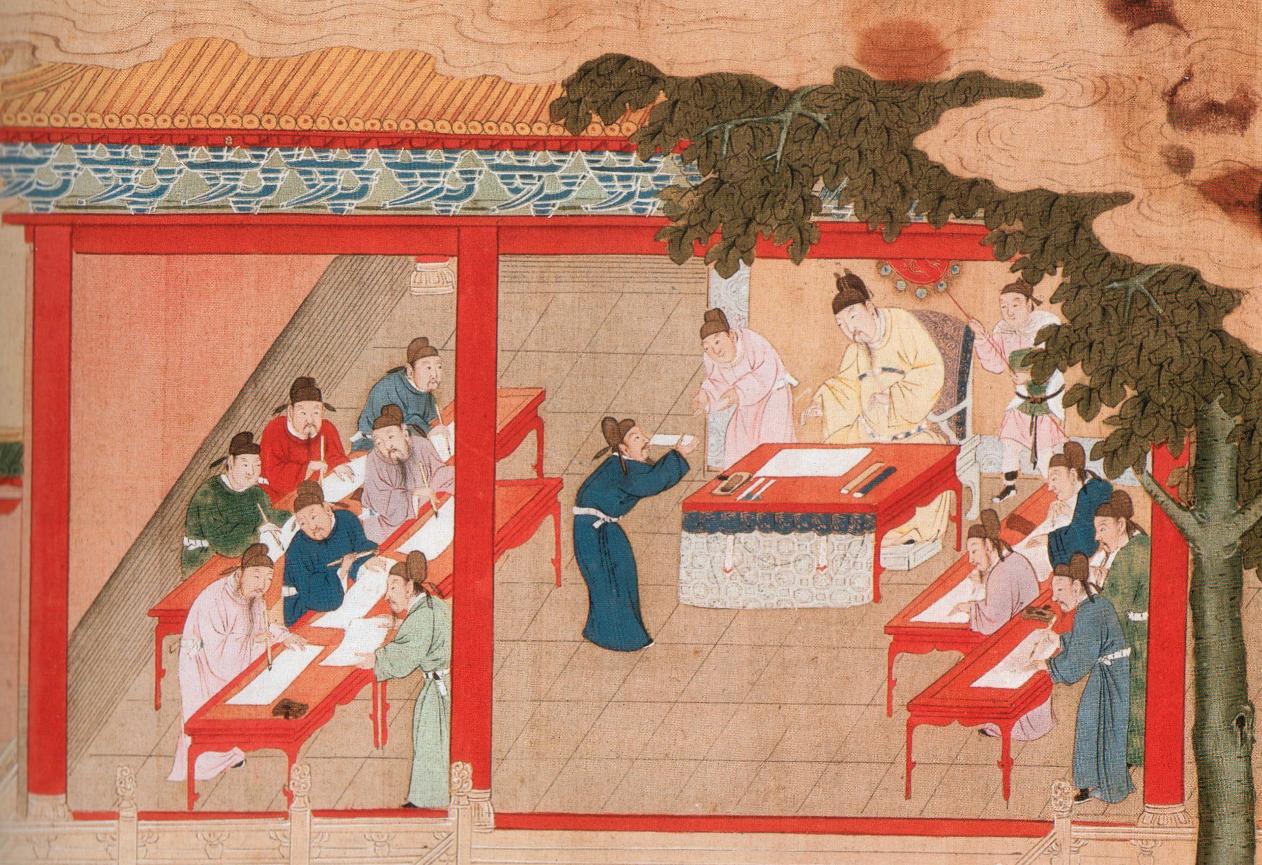
Personnel management in China has evolved over thousands of years, spanning multiple dynasties, yet the underlying logic remains remarkably consistent — competition at every level is inevitable when the ultimate goal of ambitious officials is to secure a prominent position in the capital. Historically, the imperial examination system (keju) served as the primary meritocratic filter for selecting officials. In this sense, career advancement in China has always resembled the “promotion tournament” model. In recent decades, GDP growth has served as the modern keju.
GDP as a metric for cadre evaluation
China’s economic rise since the “reform and opening-up” era has seen average GDP growth of roughly 9% per year.8 Over several decades, substantial investments in its industrial sector were possible due to complete buy-in from local governments eager to implement central directives on economic development. As career progression for local cadres hinged heavily on economic performance, GDP growth naturally became the most critical factor in determining winners of regional “promotion tournaments.”
While economic performance is not the only factor in cadre assessments, it is certainly the most measurable. However, Goodhart’s Law states that “when a measure becomes a target, it ceases to be a good measure.” Three primary downsides of using GDP as a metric are data falsification, overcapacity in priority sectors, and unsustainable debt-fueled growth.
An implication of the “one-level down” personnel management system is that it creates a cascading vested-interest group (既得利益集团) where participants have perverse incentives to over-report GDP numbers at each level. For example, county-level officials strive to demonstrate competence to municipal-level leadership, who themselves are measured on economic output and assessed at the provincial level. This results in a scenario where only the central leadership, who require accurate data for policymaking, have an incentive to unveil the true numbers. China’s storied history of falsifying local data contributed to the deaths of millions during the Great Leap Forward, where local officials embellished grain output even as the country faced widespread starvation.9 GDP is no exception to this phenomenon. The central government, through its consumption of internal reference (内部参考 or 内参) materials, is not oblivious to the misrepresentation of local economic data. Former Premier Li Keqiang once remarked that local GDP numbers were “man-made and unreliable.”10 Nevertheless, economic performance metrics have historically been tolerated as both a sufficient source of motivation and a useful metric by which cadres are evaluated.

Economic performance as a metric motivates local cadres to take on substantial investments. Photo by Christian Lue on Unsplash.
A secondary adverse effect of GDP as the metric for “promotion tournaments” is the phenomenon of destructive regional competition or “involution” (内卷). Regional officials attempt to replicate success cases in sectors of national priority, such as the “New Three Things” (新三样) of electric vehicles, solar panels, and lithium-ion batteries.11 The result is relentless price wars and overcapacity that the domestic market struggles to consume. Thin profit margins ultimately eat into the profits of hundreds of similar companies betting on becoming the next CATL or BYD. The state’s attempt to crack down on “involution” is an ongoing effort and the underlying issue it needs to address is correcting cadre incentives.
Tenure and turnover of local officials become an issue when economic performance is used as the primary target for promotion. Average tenure for provincial-level leadership has seen a noticeable decline over the past several decades from an average of 4.5 years for provincial Party secretaries in 1985 to just 1.6 years in 2021.12 A shorter tenure naturally means officials need to prove competence quickly, often resulting in reckless investments in flashy projects. Officials who are promoted or transferred into a new region often have to deal with the mess (烂摊子) left behind by the previous administration. This creates a scenario where officials are caught in a vicious cycle of repairing damages and proving competence, all of which must happen within a couple of years.
China’s 15th Five-Year Plan signaled a clear de-emphasis of GDP growth as a national priority. Instead, the shift toward high-quality development, technological self-reliance, and social stability leaves much to be interpreted by local officials. The next section explores possible measures China might take to change cadre incentives through alternative metrics.
Changing cadre incentives and alternatives to GDP as a metric
In China’s personnel management system, competition is inevitable — wherever competition exists, there must be some metric by which winners are promoted.
Changes in the local cadre incentive structure have been noted by China analysts in the past several years. An excellent article by Zhuoran Li pointed out in December 2024 that “economic development is no longer a priority for local cadres.”13 Li noted that local cadres, especially those past the promotional age for their rank, lost motivation to work due to the “de-emphasis of individual responsibility” under the new cadre evaluation system. On the contrary, overly ambitious officials who irresponsibly take on local debt to fund flashy projects have also been under intense scrutiny.14
China analysts noted a shift from “hard targets” such as GDP to softer bureaucratic targets for cadre assessments. However, in a zero-sum “promotion tournament” model of competition, de-emphasizing individual responsibility and implementing soft targets is not conducive to incentivizing cadres to take action in accordance with central priorities. In China’s personnel management system, competition is inevitable — wherever competition exists, there must be some metric by which winners are promoted. To replace economic growth measured by GDP, the central leadership will inevitably need to signal the adoption of a new metric.
China’s gig economy represents roughly 40% of the total workforce. Photo by Yunming Wang on Unsplash.
Logically, the new metric should address the most pressing issues in China’s socioeconomic environment and top concerns for China’s leadership. Some of these concerns include social stability, youth unemployment rate, military and civilian corruption, fertility rate, and percentage of flexible employment in the economy.
- Social stability maintenance (维稳)
- Historically, social stability maintenance (维稳) has been the top priority for China. Data on political unrest and “mass incidents” is already monitored closely within China, despite the nondisclosure of public figures since 2005.15 With its vast surveillance apparatus, public protests are tracked and suppressed in a timely manner by local public security officials. However, large-scale protests such as the bank runs in Henan over frozen funds16 and the White Paper protest over COVID-19 lockdowns17 still occur under extreme circumstances. Officials pay close attention to public uprisings within their jurisdiction, as any such news that reaches Beijing adversely impacts their career prospects. However, as the COVID-19 pandemic showed, personal connections and implementation of central leadership directives matter more than the public outbreaks themselves. Hubei Party Secretary Jiang Chaoliang was ousted from his post in February 2020 due to supposed mishandling of the coronavirus, yet Shanghai Party Secretary Li Qiang was promoted to Premier of the State Council despite the protests in Shanghai over harsh lockdowns.
- Historically, social stability maintenance (维稳) has been the top priority for China. Data on political unrest and “mass incidents” is already monitored closely within China, despite the nondisclosure of public figures since 2005.15 With its vast surveillance apparatus, public protests are tracked and suppressed in a timely manner by local public security officials. However, large-scale protests such as the bank runs in Henan over frozen funds16 and the White Paper protest over COVID-19 lockdowns17 still occur under extreme circumstances. Officials pay close attention to public uprisings within their jurisdiction, as any such news that reaches Beijing adversely impacts their career prospects. However, as the COVID-19 pandemic showed, personal connections and implementation of central leadership directives matter more than the public outbreaks themselves. Hubei Party Secretary Jiang Chaoliang was ousted from his post in February 2020 due to supposed mishandling of the coronavirus, yet Shanghai Party Secretary Li Qiang was promoted to Premier of the State Council despite the protests in Shanghai over harsh lockdowns.
- Anti-corruption (反腐败)
- Since Xi took office, he has embarked on a persistent anti-corruption campaign. While there is reason to believe that a percentage of anti-corruption purges are politically motivated, corruption is nonetheless a real and pervasive issue in China.18 However, anti-corruption investigations are a double-edged sword; a genuine attempt to prove compliance with anti-corruption directives can be interpreted in two ways. On the one hand, an increased number of investigations within a region can indicate a genuine cleanup effort that Beijing advocates for. On the contrary, it can also reflect gross mismanagement by regional leadership cadres. Perhaps this is why surges of anti-corruption investigations occur after regional official turnover, motivated primarily by the incoming officials’ desire to get rid of political rivals and instate their own patronage networks. The most prominent example of this is Bo Xilai’s “sing red and strike the black” anti-crime campaign in 2009 as Party Secretary of Chongqing. While Bo made significant headlines with the campaign, the crackdown was a slap in the face of Wang Yang, Chongqing’s former Party Secretary, who was implicitly labeled as “having tolerated ‘the black’ during his tenure.”19 If Beijing continues to highlight anti-corruption as a priority, a core metric for regional cadres could be the number of anti-corruption investigations conducted.
- Since Xi took office, he has embarked on a persistent anti-corruption campaign. While there is reason to believe that a percentage of anti-corruption purges are politically motivated, corruption is nonetheless a real and pervasive issue in China.18 However, anti-corruption investigations are a double-edged sword; a genuine attempt to prove compliance with anti-corruption directives can be interpreted in two ways. On the one hand, an increased number of investigations within a region can indicate a genuine cleanup effort that Beijing advocates for. On the contrary, it can also reflect gross mismanagement by regional leadership cadres. Perhaps this is why surges of anti-corruption investigations occur after regional official turnover, motivated primarily by the incoming officials’ desire to get rid of political rivals and instate their own patronage networks. The most prominent example of this is Bo Xilai’s “sing red and strike the black” anti-crime campaign in 2009 as Party Secretary of Chongqing. While Bo made significant headlines with the campaign, the crackdown was a slap in the face of Wang Yang, Chongqing’s former Party Secretary, who was implicitly labeled as “having tolerated ‘the black’ during his tenure.”19 If Beijing continues to highlight anti-corruption as a priority, a core metric for regional cadres could be the number of anti-corruption investigations conducted.
- Fertility rate (生育率)
- China’s famous one-child policy, implemented from 1979 to 2015, has significantly impacted the country’s demographic in the decades that followed. While overpopulation was the concern during China’s economic growth, the recent trends of declining birth rates have turned the population issue upside down. With one of the lowest fertility rates in the world, China has failed to promote population growth despite lifting the one-child policy in 2016. A plethora of issues due to the aging population will soon follow. As parents of only children retire, the financial burden of caring for elderly further disincentivizes having children, exacerbating the issue. Central leadership has repeatedly signaled the importance of promoting childbirth across China through reversing the one-child policy, boosting childcare subsidies, limiting wedding expenditure, and eliminating family stress through the “Double Reduction Policy.”20 Thus far, however, these policies have yet to result in nationwide population growth. An approach Beijing may take is to set fertility rates as a metric and allow local officials to formulate creative strategies to boost population growth within their regions. Successful regional pilot programs (试点) can then look to be scaled up on a national level in a process called “from point to surface” (由点到面).
- China’s famous one-child policy, implemented from 1979 to 2015, has significantly impacted the country’s demographic in the decades that followed. While overpopulation was the concern during China’s economic growth, the recent trends of declining birth rates have turned the population issue upside down. With one of the lowest fertility rates in the world, China has failed to promote population growth despite lifting the one-child policy in 2016. A plethora of issues due to the aging population will soon follow. As parents of only children retire, the financial burden of caring for elderly further disincentivizes having children, exacerbating the issue. Central leadership has repeatedly signaled the importance of promoting childbirth across China through reversing the one-child policy, boosting childcare subsidies, limiting wedding expenditure, and eliminating family stress through the “Double Reduction Policy.”20 Thus far, however, these policies have yet to result in nationwide population growth. An approach Beijing may take is to set fertility rates as a metric and allow local officials to formulate creative strategies to boost population growth within their regions. Successful regional pilot programs (试点) can then look to be scaled up on a national level in a process called “from point to surface” (由点到面).
- Flexible employment (灵活就业)
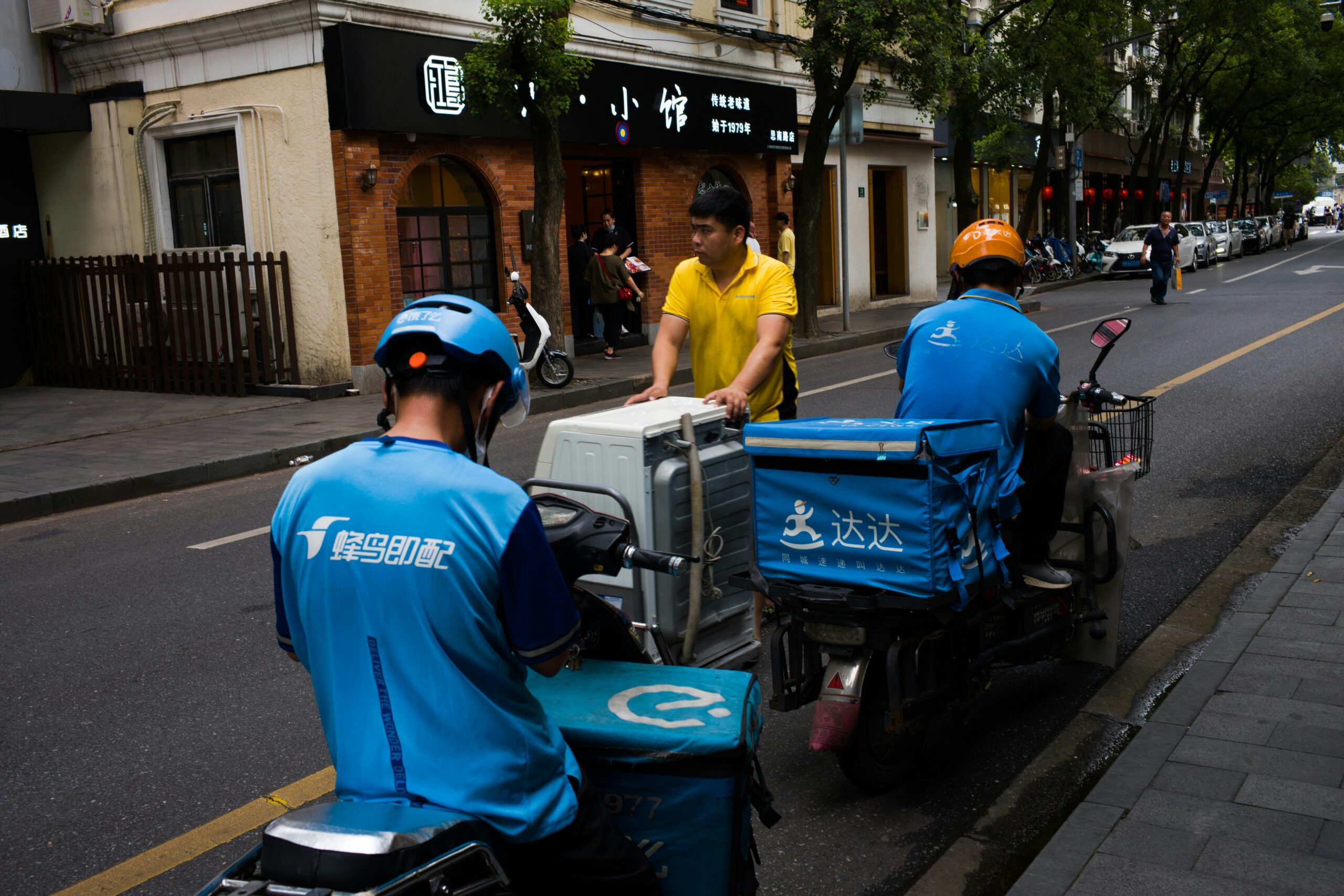
- Since 2017, central leadership has repeatedly emphasized the importance of “high-quality growth” (高质量发展) in the economy.21 The rationale behind this statement is China’s attempt to reduce the percentage of economic activity in real estate and nonproductive sectors. In 2025, the number of workers participating in flexible employment reached 280 million, growing every year since 2019.22 The 15th Five-Year Plan signaled an anticipated rise over the next five years in innovation-driven development (创新驱动) through three indicators: growth of R&D expenditure, high-value invention patents, and value add of core industries of the digital economy.23 Interestingly, the Five-Year Plan also mentioned promoting “healthy development of flexible employment and new forms of employment,” including insurance and subsidized housing for those in flexible employment. In theory, supporting workers in the gig economy seems counterintuitive to promoting “high-quality growth” in key sectors such as AI, semiconductors, and high-quality manufacturing. In the long term, it remains to be seen if Beijing attempts to limit the percentage of flexible employment by setting metrics to shift employment toward more productive sectors.
In addition to these metrics, another solution China might explore to solve the perverse incentives problem is an increase in official tenure duration and lower turnover rate of municipal- and provincial-level cadres. Establishing longer tenure incentivizes long-term planning as officials will need to see through the results of their initiatives. As mentioned previously, the issue with this approach is the risk of local power bases and patronage networks. Another necessary adjustment is to the age limits for promotions if time spent at each civil service rank is increased. It remains to be seen if tenure will continue to decrease as China begins to shuffle provincial-level leadership before the 21st Party Congress next year.
What is the “correct view of political achievements”?
To shift cadres away from a focus on GDP growth, central leaders must decide on and clearly signal adoption of a new metric for officials to strive toward.
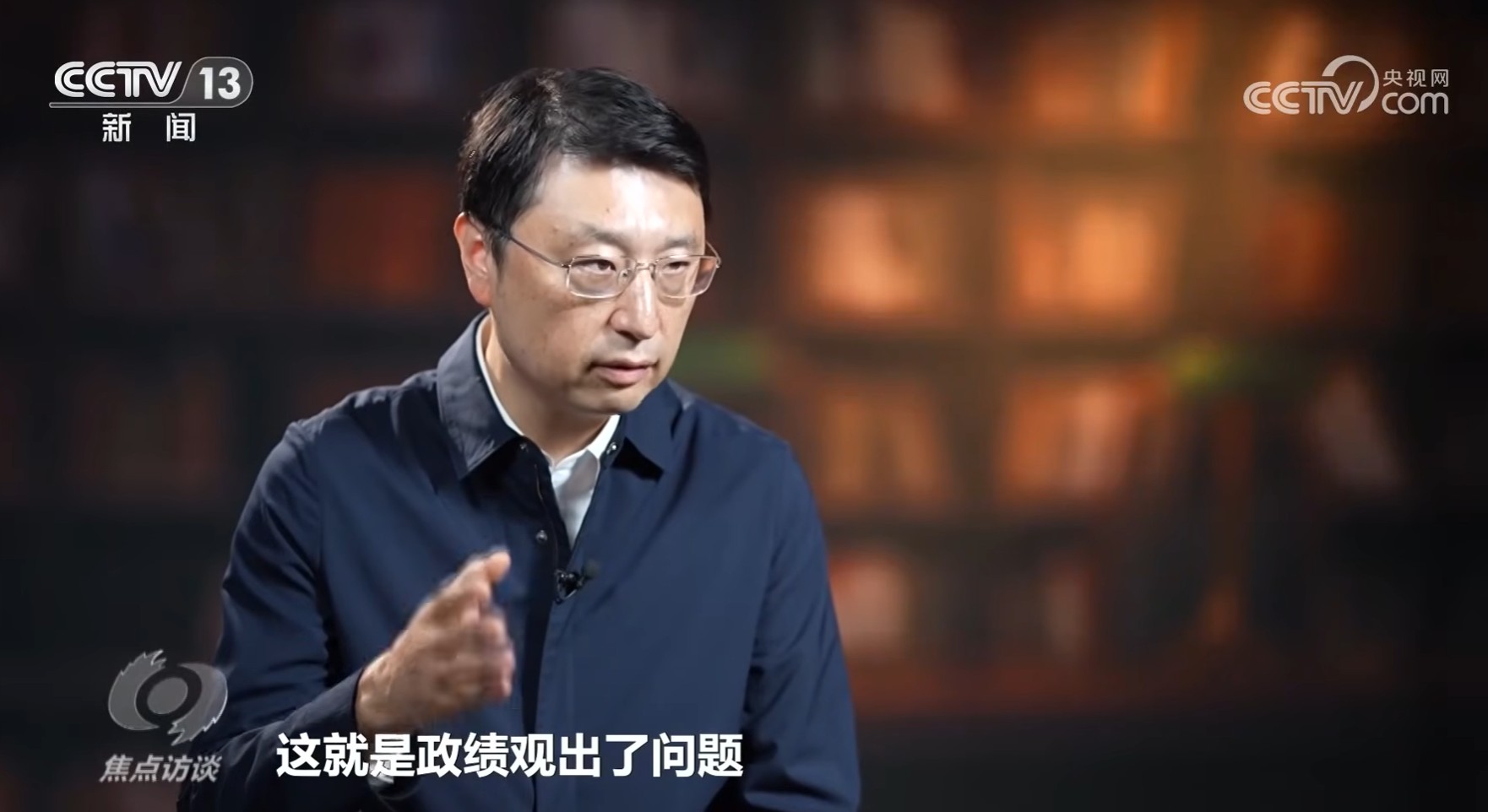
The first mention of the “correct view of political achievements” was by former General Secretary Hu Jintao during the Central Economic Work Conference in 2003. Hu stressed that a “correct view of political achievements” meant carrying out the Party’s true purpose — serving the people through doing solid work, producing real results, and abstaining from comparing achievements for the sake of appearance.24 More than twenty years later, China under Xi Jinping has resurfaced this topic and initiated a five-month education campaign. Only this time, China faces a different set of socioeconomic challenges that can no longer be overshadowed by economic growth.
CCTV footage on March 21st, 2026, on the correct view of political achievements
As the five-month education campaign on “correct view of political achievements” comes to an end, Beijing has yet to announce the outcomes of this campaign. Perhaps the central leadership is waiting for the regions to develop the best interpretation of “the correct view of political achievements,” with the intention of scaling successful approaches nationally. What is unlikely to change is the Party’s personnel management system and the “promotion tournament” model of competition. To shift cadres away from a focus on GDP growth, therefore, central leaders must decide on and clearly signal adoption of a new metric for officials to strive toward. The campaign to study the “correct view of political achievements” is an ongoing process to determine that metric.
Key terms
- “Political Tournament” (政治锦标赛) or “Promotion Tournament” (晋升锦标赛) model — zero-sum competition among regional officials for promotion, historically with an emphasis on GDP growth
- “One-level down” management (下管一级) — process by which Organization Departments at each level manages the appointments, dismissals, and transfers of cadres one civil service rank below
- “Neican or Internal Reference” (内部参考 or 内参) — reporting by Xinhua News Agency to each level of government, providing officials with updates on current domestic trends
Notes:
- 《关于在全党开展树立和践行正确政绩观学习教育的通知》, translated as “Carrying Out Education on Establishing and Practicing a Correct View of Political Achievements Throughout the Party.” Original source from https://www.12371.cn/2026/02/23/ARTI1771848099115606.shtml. ↩︎
- For more information on China’s civil service ranking, see https://thinkprc.com/civil-service-ranking/. ↩︎
- “中共中央政治局召开会议 讨论“十五五”规划纲要草案和政府工作报告. 中共中央总书记习近平主持会议” CCP Central Committee Politburo holds meeting to discuss draft outline of the 15th Five-Year Plan and government work report. CCP Central Committee General Secretary Xi Jinping presides over the meeting. https://www.mee.gov.cn/ywdt/szyw/202602/t20260227_1145049.shtml. ↩︎
- According to the National Bureau of Statistics, China’s average annual growth rate between 2021-2025 was 5.4%. https://www.stats.gov.cn/sj/sjjd/202606/t20260602_1963864.html ↩︎
- Zhou, Li-An. (2004). The incentive and cooperation of government officials in the political tournaments: An interpretation of the prolonged local protectionism and duplicative investments in China. Economic Research Journal. 6. 33-40. ↩︎
- Prior to this change, the Central Organization Department oversaw the appointments of all cadres above the department/bureau level in what was known as the “two-level down” (下管两级) system. ↩︎
- Zhou Li-An. Promotion Tournaments—Literature Review and Future Directions[J]. Quarterly Journal of Economics and Management, 2022, 1(1): 1-34 ↩︎
- China Power Team, “Unpacking China’s GDP,” China Power (CSIS), December 20, 2022, updated March 16, 2026, accessed August 8, 2026, https://chinapower.csis.org/tracker/china-gdp/. ↩︎
- Yang Jisheng, Tombstone: The Great Chinese Famine, 1958–1962, trans. Stacy Mosher and Guo Jian (New York: Farrar, Straus and Giroux, 2012). ↩︎
- Andreas Illmer, “China’s Growth Data — Can You Trust It?” BBC News, January 2016, https://www.bbc.com/news/business-35341869. ↩︎
- Brian Wong, “The Foreign Policy Significance of China’s ‘Anti-Involution’ Campaign,” China-US Focus, September 19, 2025, https://www.chinausfocus.com/finance-economy/the-foreign-policy-significance-of-chinas-anti-involution-campaign. ↩︎
- Cheng Li, “Provinces: The Ongoing Reshuffling of Provincial Party Committees,” China-US Focus, March 27, 2022, https://www.chinausfocus.com/2022-CPC-congress/provinces-the-ongoing-reshuffling-of-provincial-party-committees. ↩︎
- “Changing Cadre Incentives: The Untold Story of China’s Economic Challenge,” The Diplomat, December 7, 2024, https://thediplomat.com/2024/12/changing-cadre-incentives-the-untold-story-of-chinas-economic-challenge/ ↩︎
- Chun Han Wong, “A Rising Star’s Abrupt Fall Shows Xi’s Crackdown on Overambitious Officials,” Wall Street Journal, August 5, 2026, https://www.wsj.com/world/china/a-rising-stars-abrupt-fall-shows-xis-crackdown-on-overambitious-officials-3d7dfb92. ↩︎
- “Looking at Protesting in China,” USC U.S.-China Institute, July 22, 2021, https://china.usc.edu/looking-protesting-china. ↩︎
- Vincent Ni, “China: Violent Clashes at Protest Over Frozen Rural Bank Accounts,” The Guardian, July 11, 2022, https://www.theguardian.com/world/2022/jul/11/china-violent-clashes-at-protest-over-frozen-rural-bank-accounts. ↩︎
- Laura McQuillan, “Filling in the Blank: Why Protesters in China Are Holding Up White Sheets of Paper,” CBC News, November 30, 2022, https://www.cbc.ca/news/world/blank-pages-china-protest-1.6668661. ↩︎
- For more information on anti-corruption investigations, see “The Logic of Purges in the PRC”. ↩︎
- “China: Ten Years Since the Fall of Bo Xilai (1),” China Worker, March 20, 2022, https://chinaworker.info/en/2022/03/20/33023/. ↩︎
- Daria Impiombato and Nis Grünberg, “When Giving Birth Is a National Duty: Beijing’s Struggle to Reverse Demographic Decline,” MERICS (Mercator Institute for China Studies), October 8, 2025, https://merics.org/en/report/when-giving-birth-national-duty-beijings-struggle-reverse-demographic-decline. ↩︎
- Why China’s Xi Jinping Is Pushing ‘High-Quality Development’ at Third Plenum,” Bloomberg, July 16, 2024, https://www.bloomberg.com/news/articles/2024-07-16/why-china-s-xi-jinping-is-pushing-high-quality-development-at-third-plenum. ↩︎
- Analysis: China’s Booming Gig Economy Masks Job Market Pain, Strains Welfare System,” Reuters, July 6–7, 2026, https://www.reuters.com/business/world-at-work/chinas-booming-gig-economy-masks-job-market-pain-strains-welfare-system-2026-07-06/. ↩︎
- National Development and Reform Commission (国家发展和改革委员会), Outline of the 15th Five-Year Plan for National Economic and Social Development of the People’s Republic of China (中华人民共和国国民经济和社会发展第十五个五年规划纲要), March 2026, https://www.ndrc.gov.cn/fggz/fzzlgh/gjfzgh/202603/U020260317369114704096.pdf. ↩︎
- Hu Jintao, “坚持立党为公、执政为民,树立正确的政绩观” [Uphold the Party’s Public-Spirited Governance and Commitment to Serving the People, Establish a Correct View of Political Achievements], speech at the Central Economic Work Conference, November 27, 2003, 改革大数据服务平台 (Reform Big Data Service Platform), http://app.reformdata.org/print.php?contentid=4923. ↩︎
Thinking smarter about China
Subscribe to receive notifications on new articles.
If you would like to support us, please consider buying us a coffee.